
Orange County Clerk Office
North Carolina uses a unified Clerk of Superior Court structure. The Orange County Clerk of Superior Court is Mark Kleinschmidt, and the research notes that a 2026 Judicial Branch story identified him as having served in that role since 2018. The statewide Judicial Branch court-officials material explains that clerks of superior court are elected in all 100 counties to four-year terms, keep court records, and have probate responsibilities.
For Orange County, the clerk office is reached through the Orange County Courthouse at 106 East Margaret Lane, Hillsborough, NC 27278. The contact directory lists the Clerk of Superior Court at 919-644-4500. The courthouse hours are 8:30 a.m. to 5:00 p.m. Monday through Friday. Estate appointments use a separate line, 919-644-4570, and the estate email Orange.Estates@nccourts.org.
Orange County Clerk of Superior Court
Clerk: Mark Kleinschmidt
106 East Margaret Lane
Hillsborough, NC 27278
919-644-4500
8:30 a.m.-5:00 p.m. Monday-Friday
The Judicial Branch court officials page explains the statewide clerk role.
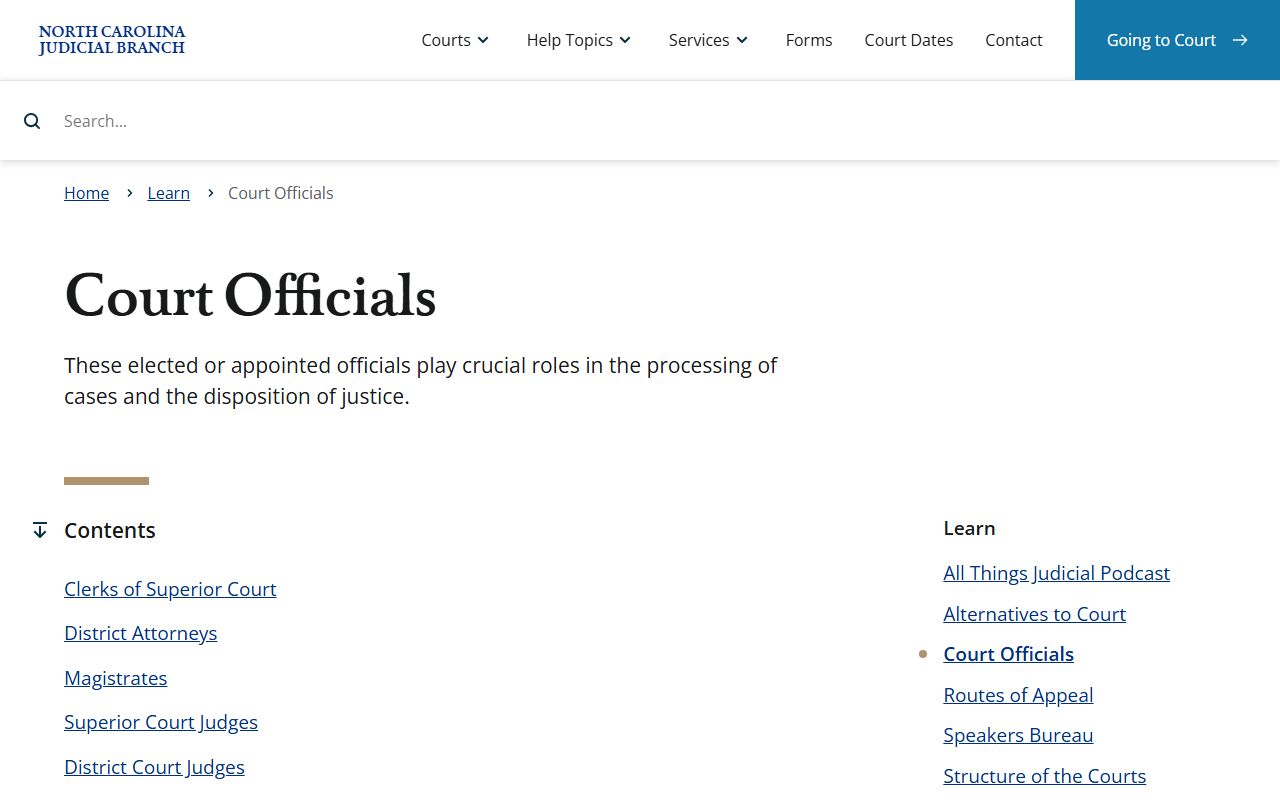
That statewide role is why the Orange County Clerk of Superior Court handles court records and probate duties in the same office structure.
Orange County Clerk Duties
The Clerk of Superior Court keeps records for Superior Court and District Court matters filed in Orange County. The research lists criminal cases, civil actions, special proceedings, estates, divorce judgments, court calendars, judgments, liens, lis pendens, court minutes, foreclosures, partitions, condemnations, and audio-recording requests where a court proceeding was recorded. The clerk also has the local probate role for estates and guardianship proceedings.
- Maintain court records, files, dockets, minutes, and indexes.
- Provide public terminal access to eligible criminal, civil, special proceeding, and estates information.
- Route paper file review and copy requests for Orange County court cases.
- Process estate appointments and probate filings through the clerk-as-probate-judge role.
- Support judgment, lien, special proceeding, and divorce judgment record access.
The Orange County contact directory lists the clerk and related court-office phone numbers.
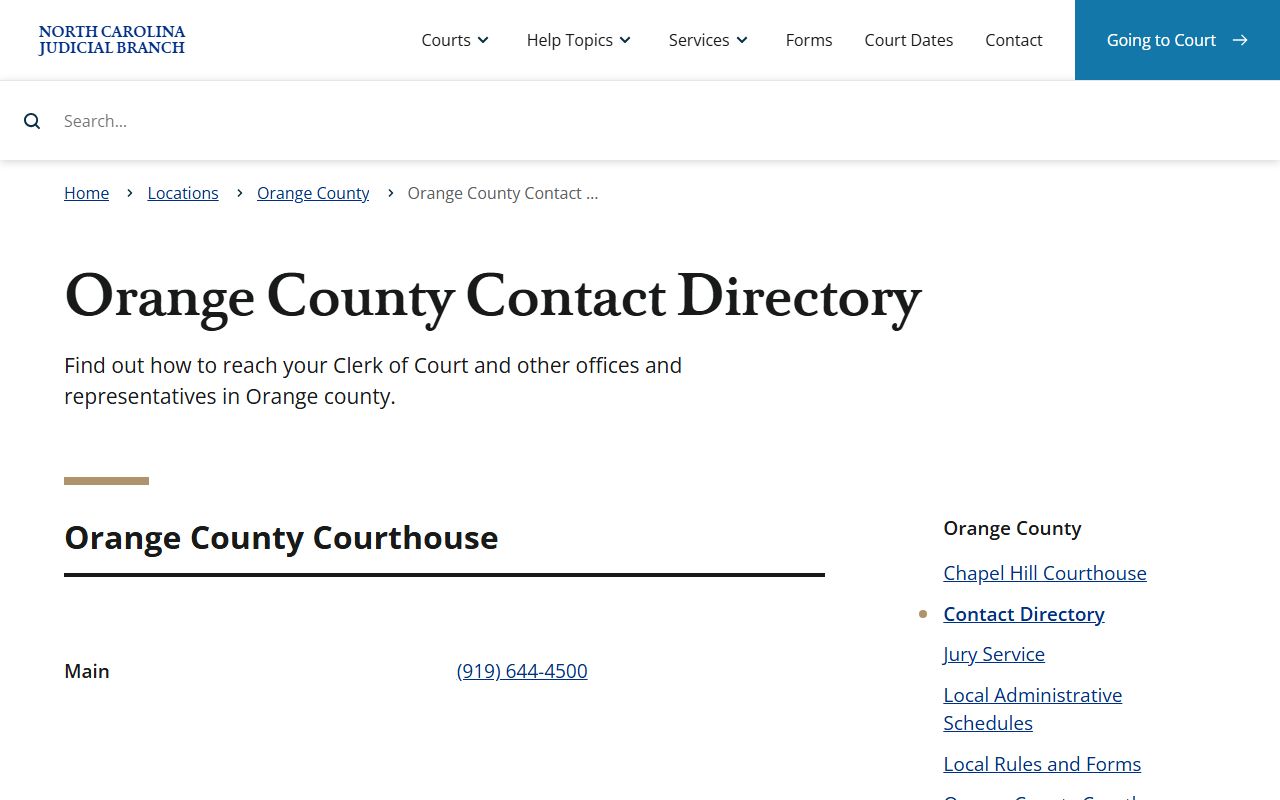
The directory is useful when a request belongs with the clerk, District Attorney, magistrates, jury service, custody mediator, or another court office.
Records the Clerk Does Not Hold
Several Orange County records are often confused with court files. Marriage licenses and marriage certificates are held by the Orange County Register of Deeds. Birth and death certificates for Orange County events are also Register of Deeds or state vital-record matters. Deeds, most land records, military discharges, and assumed business names are Register of Deeds records. Police reports are requested from the law enforcement agency involved, not from the clerk office.
County administrative records are requested through Orange County NextRequest, but court case files remain Judicial Branch records. For a divorce judgment, use the Clerk of Superior Court in the county where the divorce was granted. For a certified marriage certificate, use the Register of Deeds. For state prison, probation, or parole records, use the NC DAC channel rather than the Orange County court clerk.
| Record Type | Correct Orange County Custodian | Clerk Role |
|---|---|---|
| Divorce judgment | Clerk of Superior Court | Maintains the court file and judgment. |
| Marriage certificate | Register of Deeds | No clerk copy route for marriage certificates. |
| Estate file | Clerk of Superior Court | Handled through Estates Division appointments. |
| Police report | Investigating law enforcement agency | May become part of a court case if filed as evidence. |
| County administrative record | Orange County NextRequest | Not the route for court case files. |
Request Orange County Court Copies
Certified copies are used when a court document must prove official status, such as a divorce judgment, order, estate authority, or judgment record. The practical route is to identify the case number or party names first, check the Portal or public terminal when possible, then contact the clerk for copy cost, certification, pickup, or mail instructions. The research did not locate local mail instructions for every case type, so copy requesters should confirm the file number and current cost before mailing payment.
- Search the NC eCourts Portal or use a clerk public terminal to identify the case and filing county.
- Confirm whether the needed document is public, restricted, sealed, or available only from the paper file.
- Call the Orange County Clerk of Superior Court at 919-644-4500 to confirm copy and certification cost.
- Submit the request in person or by the clerk-approved mail route, with the correct fee.
- Use the certified copy for court, agency, or legal proof only after the clerk certifies it.
Orange County Request Fields
A court-record request works best when it gives the clerk enough detail to locate the file without guessing. The Portal training material lists party name, case number, citation number, attorney bar number, attorney name, business name, cross-reference number, and nickname as Smart Search paths. The same details are useful when asking the clerk for a copy. For divorce and estate records, names and case type matter because family and probate files can include restricted material.
| Field | Required | Notes |
|---|---|---|
| Case number | Helpful | Fastest route when known; Enterprise Justice format may include year, letters, sequence, and county identifier. |
| Party names | Yes | Use defendant, plaintiff, petitioner, respondent, decedent, or business names as applicable. |
| Document type | Yes | Examples include judgment, order, divorce decree, estate letters, or docket entry. |
| Case type | Helpful | Criminal, civil, family, estate, special proceeding, traffic, or judgment. |
| Copy type | Yes | Plain or certified copy should be stated before fees are calculated. |
| Requester contact | Yes | Phone or mailing details are needed for follow-up or mailed copies. |
Orange County Clerk Fees
The Judicial Branch court-costs page says clerks charge per-page fees for photocopies of court records and publish current miscellaneous fee charts with the court-costs materials. The Orange County research did not fully extract the 2026 miscellaneous PDF, so fixed per-page court-copy amounts should be confirmed with the clerk or the current costs publication before payment. Estate administration has its own statute and cost chart, and marriage-copy fees belong to the Register of Deeds rather than the clerk.
| Fee Topic | Amount or Source | Orange County Handling |
|---|---|---|
| Plain court copies | Current cost charts | Confirm with Clerk of Superior Court before mailing payment. |
| Certified court copies | Current cost charts | Certification should be requested by document and case number. |
| Civil, criminal, special proceedings, estates costs | 2026 court costs publication | Use Judicial Branch current cost charts. |
| Certified marriage copy | $10 | Register of Deeds, not the clerk. |
The North Carolina public records definition statute is one source for the broader public-records framework.
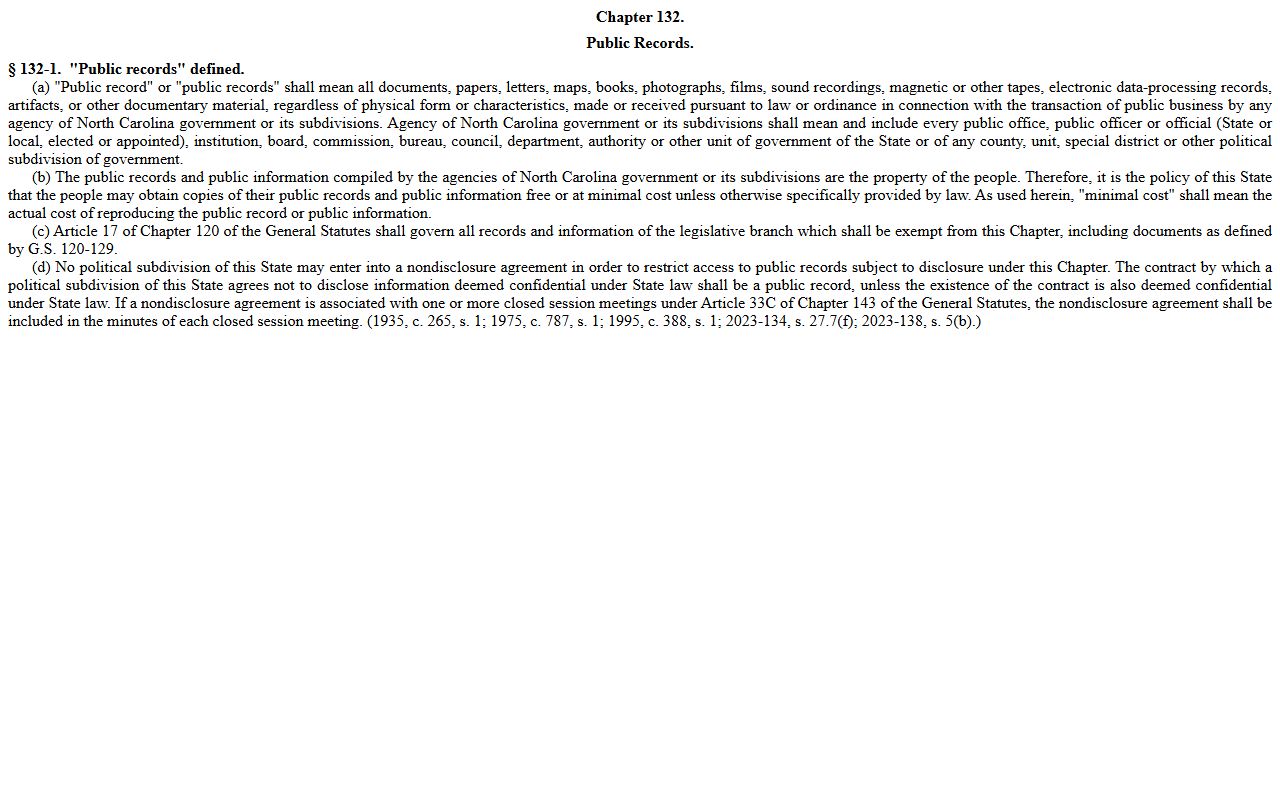
Court records also have a court-specific inspection statute, so county public-record rules do not replace the clerk route for case files.
Orange County Court Record Access
North Carolina court record access is anchored by N.C.G.S. 7A-109, which requires clerks to maintain court records, files, dockets, and indexes and states that they are open to public inspection except as prohibited by law. Public access does not include sealed cases, expunged cases, juvenile records, adoption files, confidential mental health proceedings, protected personal identifiers, or other restricted information. Some restricted case types require elevated Portal access, in-person authority, or a court order.
The court record-keeping and inspection statute is the specific statute cited in the Orange County research for clerk-maintained court records.
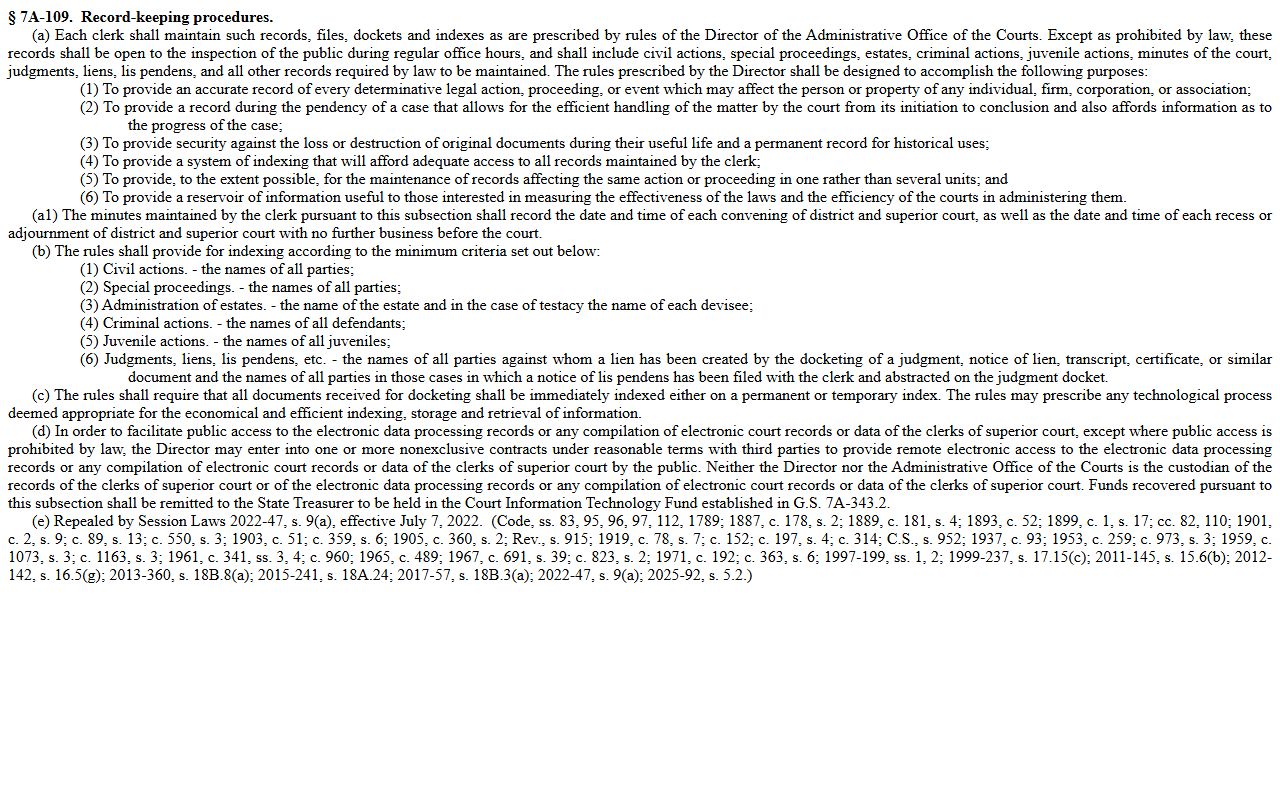
That statute explains why public court inspection runs through the clerk system even though Orange County also has a separate county records portal.
Visit Orange County Clerk
The main courthouse is the in-person access point for the Clerk of Superior Court, public terminals, criminal and civil case files, traffic payments through the cashier window, and estates appointments. The Judicial Branch courthouse page lists free three-hour parking on East Margaret Lane. It also gives a specific courthouse-entry rule: bags and purses are not allowed in the courthouse. That rule can affect records searchers who arrive with files, laptop bags, or personal items.
For records that are public but not fully online, visit the clerk office in the county where the case was filed. For Orange County cases, that is the courthouse in Hillsborough. For estate matters, call or email first because appointments are required. For general case search, the NC eCourts Portal and public terminals may reduce the amount of time needed at the clerk window.
Note: Clerk staff can route records and copies, but they cannot give legal advice about what to file or how to interpret a case.