
Orange County Trial Courts
North Carolina's court hierarchy begins with the Supreme Court of North Carolina, followed by the North Carolina Court of Appeals, then the trial divisions: Superior Court Division and District Court Division. The Judicial Branch states that North Carolina has no local court systems. Orange County is a local venue within the statewide court system, not a separate county judiciary. Orange County is listed as Prosecutorial District 18, Superior Court District 18, and District Court District 18.
Superior Court generally handles felony criminal matters, civil cases above District Court jurisdiction, some special proceedings, jury trials, and appeals from District Court for trial de novo where applicable. District Court generally handles misdemeanors, infractions, traffic, juvenile matters, domestic and family matters, small claims appeals, and civil matters within District Court jurisdiction. Magistrates operate within the District Court Division and handle initial appearances, criminal process, and certain small claims functions.
The North Carolina court structure page is the source for the statewide trial-court framework.
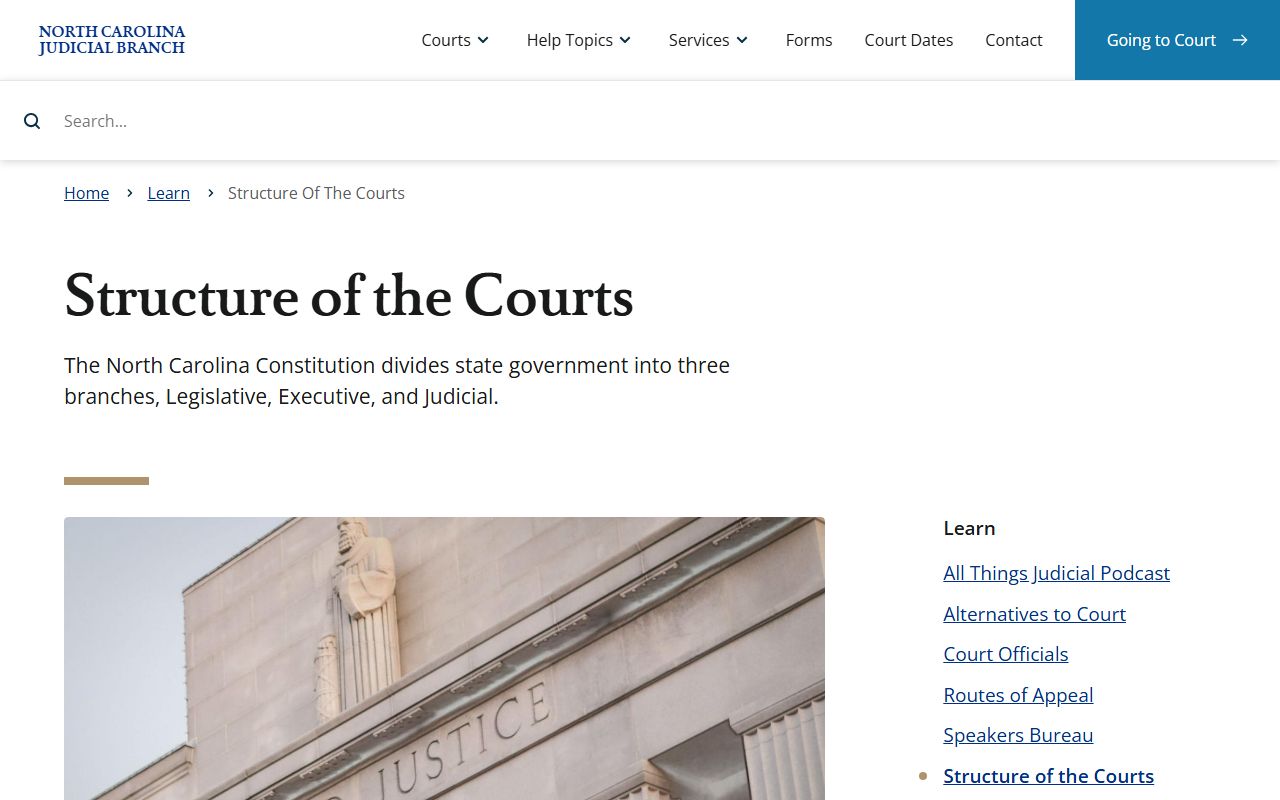
That structure explains why Orange County trial court records are searched through state Judicial Branch tools rather than a county-only database.
Orange County Court Locations
Orange County court operations are centered in Hillsborough, with a Chapel Hill courthouse location and a historical courthouse location also listed by the Judicial Branch. The main courthouse is the local access point for the Clerk of Superior Court, criminal and civil files, traffic cashier payments, first appearances, public terminals, and estates appointments. The historical courthouse is tied to trial court coordination, and Chapel Hill is important for magistrate and payment routing noted in the Orange County payment research.
| Court or Office | Type | Address | Phone |
|---|---|---|---|
| Orange County Courthouse | Main trial-court courthouse | 106 E Margaret Lane, Hillsborough, NC 27278 | 919-644-4500 |
| Chapel Hill Courthouse | Courthouse location | 179 E Franklin Street, Chapel Hill, NC 27514 | Use contact directory |
| Orange County Historical Courthouse | Historical courthouse and coordinator contact | 104 E King Street, Hillsborough, NC 27278 | 919-644-4747 |
| District Court Judges | District Court District 18 | Orange County Judicial District 18 | 919-644-4646 |
| Magistrates | District Court Division functions | Orange County courthouse system | 919-644-4690 |
| Jury Service | Trial juror support | Orange County Courthouse | 919-644-4515 |
Superior Court vs District Court
The trial-court distinction matters when searching Orange County records because case type controls which division hears the matter and what details may appear in the file. North Carolina does not use a separate county court or justice court structure like some other states. Magistrates are part of the District Court Division, and municipal ordinance or parking processes may involve town agencies where applicable, but Orange County court cases remain in the unified state system.
| Feature | Superior Court | District Court | Magistrates / Local Processes |
|---|---|---|---|
| Criminal role | Felony trials and related proceedings. | Misdemeanors, infractions, traffic, and first-stage matters. | Initial appearances, criminal process, and certain bond/process functions. |
| Civil role | Larger civil matters and special proceedings. | Lower civil matters, small claims appeals, domestic, and family cases. | Certain small claims functions within District Court Division. |
| Family and juvenile | Appeal or related roles when applicable. | Domestic, juvenile, custody, child support, and protection-order matters. | Limited statutory functions, not a separate family court. |
| Record access | Portal, clerk terminal, and clerk paper file route. | Portal, clerk terminal, traffic/payment channels, and paper files. | Clerk, magistrate office, and relevant town agency for non-court local records. |
Orange County Case Flow
Orange County criminal and civil cases move through the same statewide court structure used across North Carolina. A criminal matter may start with arrest, citation, warrant, magistrate process, or charging document, then move to first appearance, District Court, Superior Court, plea, trial, disposition, sentencing, or appeal depending on severity and procedure. A civil matter may start with a complaint or petition, then answer, motions, hearing, mediation where applicable, trial, judgment, and appeal.
Criminal flow: Arrest or citation › Magistrate or first appearance › District Court or Superior Court routing › Pretrial hearings › Plea or trial › Disposition › Sentencing › Appeal.
Civil flow: Complaint or petition › Service › Answer or response › Motions and hearings › Mediation or trial path › Judgment or order › Appeal.
First appearances for detained misdemeanor and felony defendants are documented locally as Monday through Friday at 2 p.m. in Courtroom 3 of the Orange County Courthouse, with the District Attorney and Public Defender represented.
Orange County Court Records
Superior Court and District Court records may show a case number, location, filing date, initiating event, parties, attorneys, case status, docket events, hearing dates, judicial officer, disposition, financial entries, and public documents when available. The Portal training page describes Smart Search, Search Hearings, Make Payments, and NC Judgment Search. Smart Search can show case summaries and Registers of Actions, while Search Hearings is used for court calendars and hearing details. NC Judgment Search is used for judgment indexes.
For older files, restricted details, or documents not fully visible online, the Clerk of Superior Court remains the paper-file route. Background-check users are directed by Judicial Branch guidance to use the county clerk office rather than relying only on Portal results. The Orange County courthouse has public terminal access, and paper files must be viewed in the county where the case is located.
For filing and copy channels, use the Orange County Clerk of Superior Court.
Orange County Specialty Courts
Orange County offers Adult Recovery Court and Family Recovery Court through the Criminal Justice Resource Department. Adult Recovery Court serves high-risk court-involved adults with substance use disorders who face significant incarceration. Family Recovery Court serves parents with pending abuse, neglect, or dependency cases. Both programs have five phases and approximately one year of compliance for graduation. The monitoring teams include court, defense, prosecution, treatment, probation, and case-management roles depending on the program.
Orange County Pretrial Services is also a concrete local court pathway. It meets with detained people before first appearance, gathers information about community ties and needs, and uses a Public Safety Assessment to recommend supervision levels if release is ordered. The Strike Order docket runs Thursdays at 9 a.m. in Hillsborough, and people seeking a Strike Order report to the Clerk of Court between 8:30 and 9:00 a.m. Thursday.
The Orange County Recovery Courts page documents the Adult Recovery Court and Family Recovery Court programs.
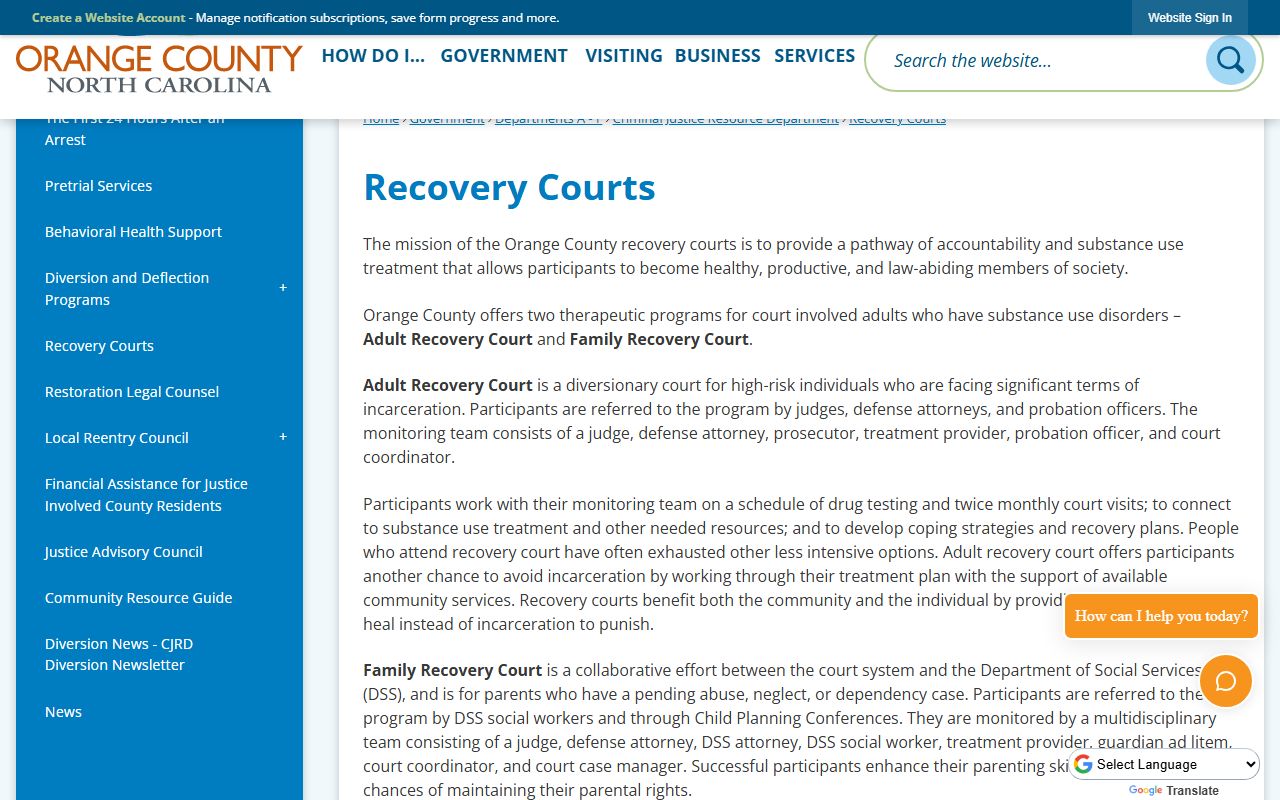
Recovery Courts are not separate record custodians, but they affect how certain Orange County District Court and Superior Court cases are managed.
Orange County District 18
Orange County belongs to Prosecutorial District 18 with Chatham County. The District Attorney page identifies Jeff Nieman as District Attorney for Chatham and Orange counties, with an Orange County Courthouse address at 144 East Margaret Lane, Hillsborough, NC 27278, and phone 919-644-4600. The public defender system uses Defender District 18 for Orange and Chatham, and NCIDS lists Public Defender Woodrena Baker-Harrell for Orange County. The defender office address in the research is 115 East King Street, Hillsborough, NC 27278, with phone 919-643-4400.
Those offices are part of the local criminal court ecosystem, but they are not the court-record custodian. The District Attorney prosecutes state criminal cases. The Public Defender represents eligible appointed defendants. The Clerk of Superior Court keeps court files and public access records. A person searching the outcome of a criminal matter should search the Portal or clerk records, not the DA or defender office.
Federal Court Distinction
Federal cases affecting Orange County are separate from Orange County Superior Court and District Court. Orange County is within the federal Middle District of North Carolina. Federal civil, criminal, civil-rights, employment, constitutional, federal-question, diversity, and federal statutory cases are not Orange County Clerk records. They are searched through PACER and CM/ECF, with CourtListener useful for opinions and some docket alerts but not as the official filing docket.
The U.S. District Court for the Middle District of North Carolina is the federal trial court for the district.
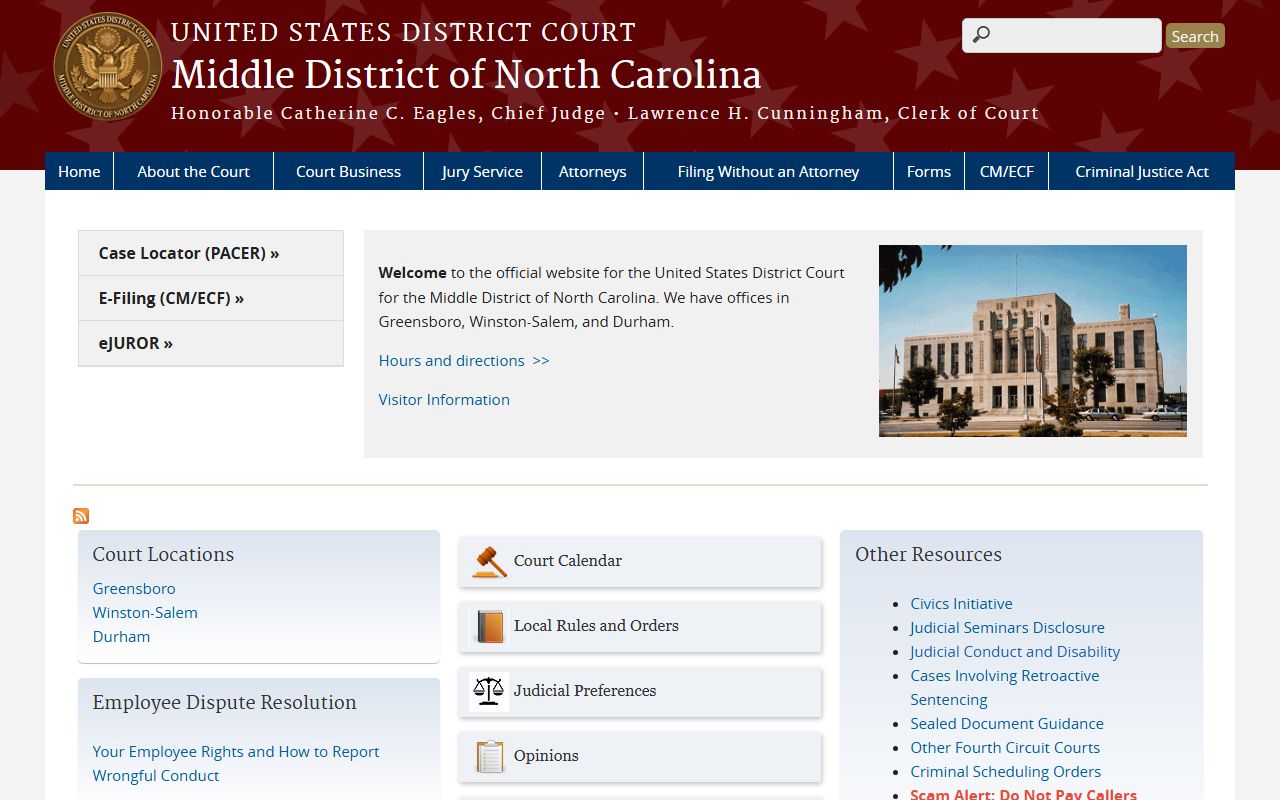
Federal district records should not be requested from the Orange County Clerk of Superior Court.
The Durham federal courthouse page lists the John Hervey Wheeler Courthouse for Middle District federal access.
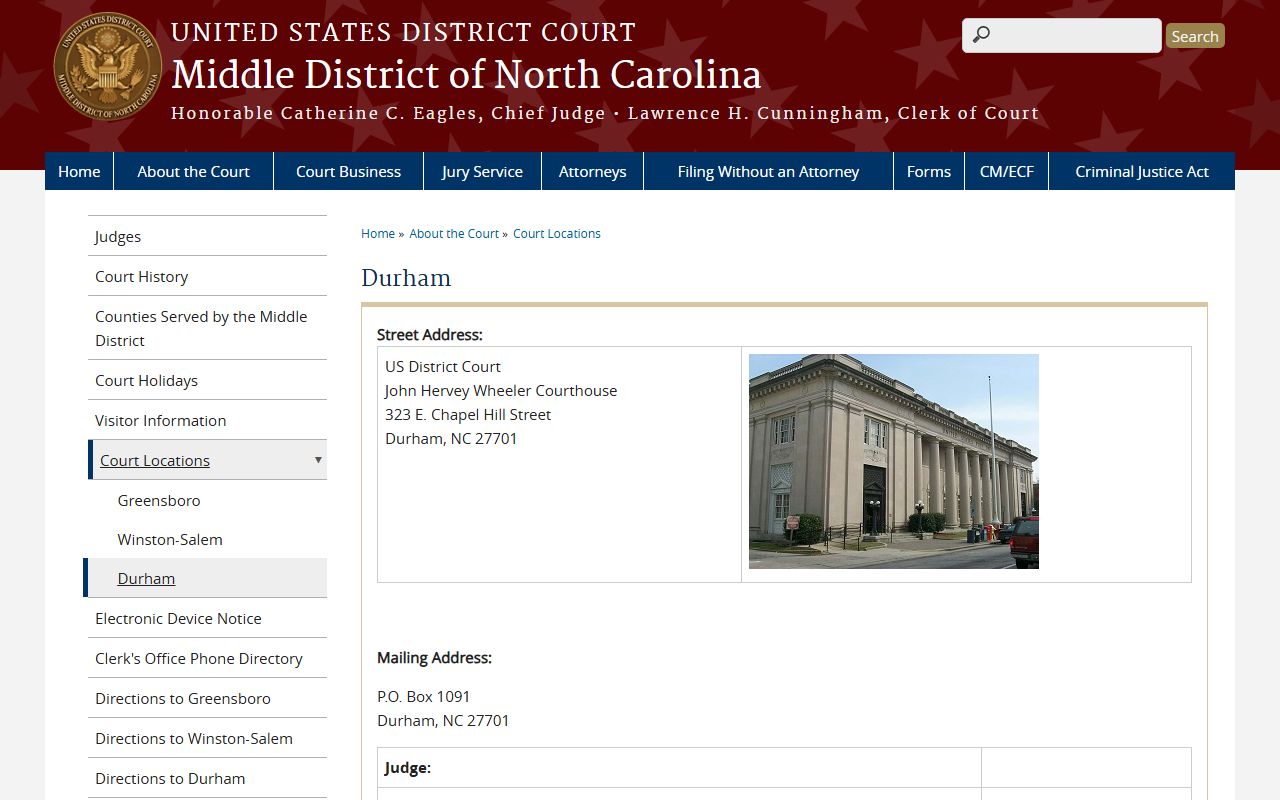
That Durham federal courthouse is a federal venue reference, not an Orange County state trial-court location.
The U.S. Attorney Middle District information page identifies the federal district's county coverage.
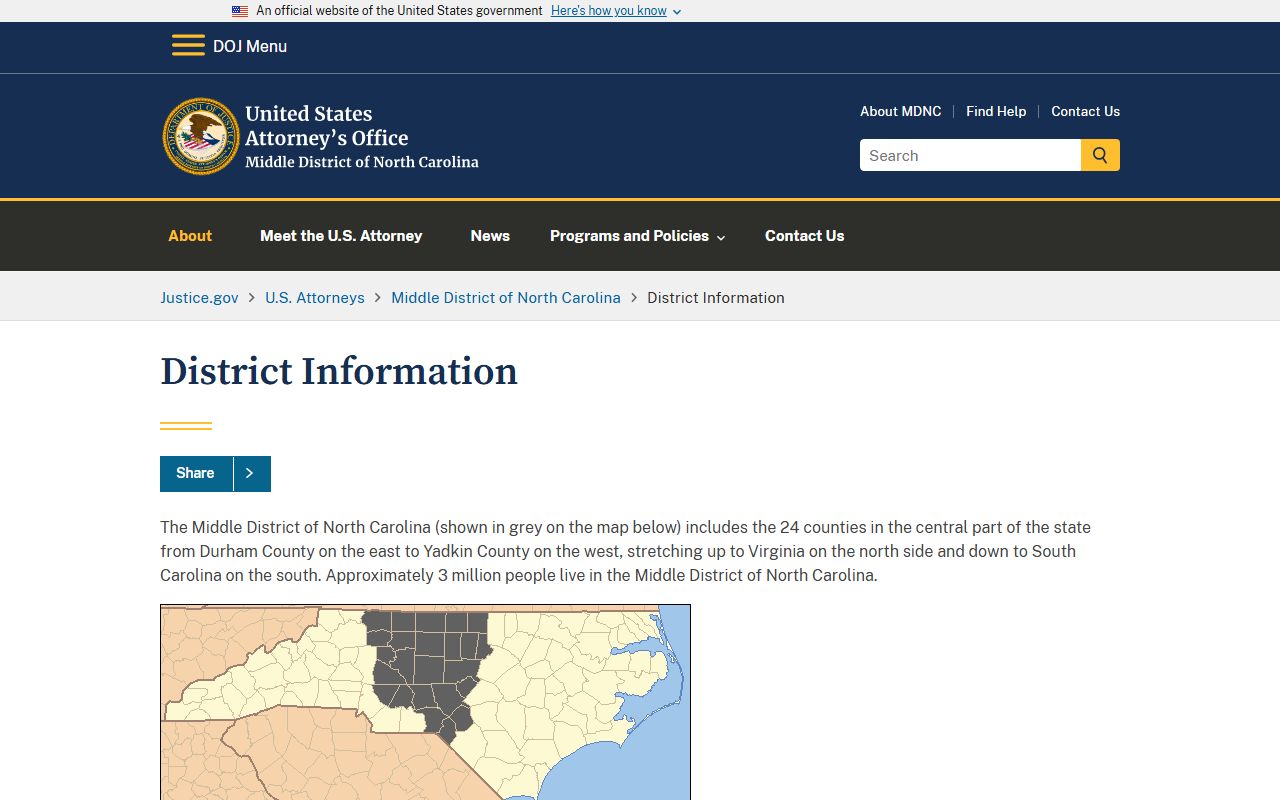
The U.S. Attorney handles federal prosecutions, while Orange County state prosecutions remain in Prosecutorial District 18.
The U.S. Bankruptcy Court for the Middle District of North Carolina handles bankruptcy matters for the district.
Bankruptcy filings are federal court records and should not be mixed with Orange County District Court civil files.
Visit Orange County Court
The Orange County Courthouse is open 8:30 a.m. to 5:00 p.m. Monday through Friday. It is the main in-person point for court files, traffic payments, public terminals, clerk services, and first appearances. The Judicial Branch page lists free three-hour parking on East Margaret Lane. It also states that bags and purses are not allowed in the courthouse, a rule that matters for records searchers, jurors, defendants, and family members coming to court.
The historical courthouse remains part of the local court campus and gives Orange County an unusual courthouse setting in downtown Hillsborough. For records access, though, the modern courthouse and the Clerk of Superior Court are the practical starting points. For hearing searches, court dates, and payments, use the eCourts Portal first, then confirm with the clerk or the relevant courthouse office when a file or appearance question remains.
Note: Orange County state court records, federal court records, Register of Deeds records, and county administrative records each use different custodians.