
Orange County Probate Office
Probate in Orange County is handled by the Clerk of Superior Court acting as ex officio Judge of Probate, through the Estates Division. There is no separate Orange County Probate Court. The probate filing location is the Orange County Courthouse, 106 East Margaret Lane, Hillsborough, NC 27278. The local courthouse notice is important: the Orange County Estates office does not take walk-ins. Estate appointments are made by calling 919-644-4570 or emailing Orange.Estates@nccourts.org.
The Clerk of Superior Court is the same official record keeper for Superior Court and District Court matters and also has probate authority. That means estate administration, wills, guardianships, and related special proceedings are court records, but the first contact point for estates is the clerk's Estates office, not the Register of Deeds and not Orange County's NextRequest portal.
Orange County Estates Division
Orange County Courthouse
106 East Margaret Lane
Hillsborough, NC 27278
919-644-4570
Orange.Estates@nccourts.org
No walk-ins for estates appointments.
Clerk of Superior Court
106 East Margaret Lane
Hillsborough, NC 27278
919-644-4500
8:30 a.m.-5:00 p.m. Monday-Friday
Orange County Probate Records
Orange County probate files may include estate-opening applications, wills, codicils, proofs of will, letters testamentary, letters of administration, year's allowance filings, summary administration, small estate administration, inventories, accountings, receipts, releases, creditor claims, notices, guardianship petitions, incompetency orders, and special proceedings tied to estate property. Some of those items may appear as nonconfidential estate information in the North Carolina eCourts Portal. Full paper files are still handled through the clerk office in the county where the case is filed.
The North Carolina Judicial Branch estates topic is the statewide source for estate administration and probate filing options.
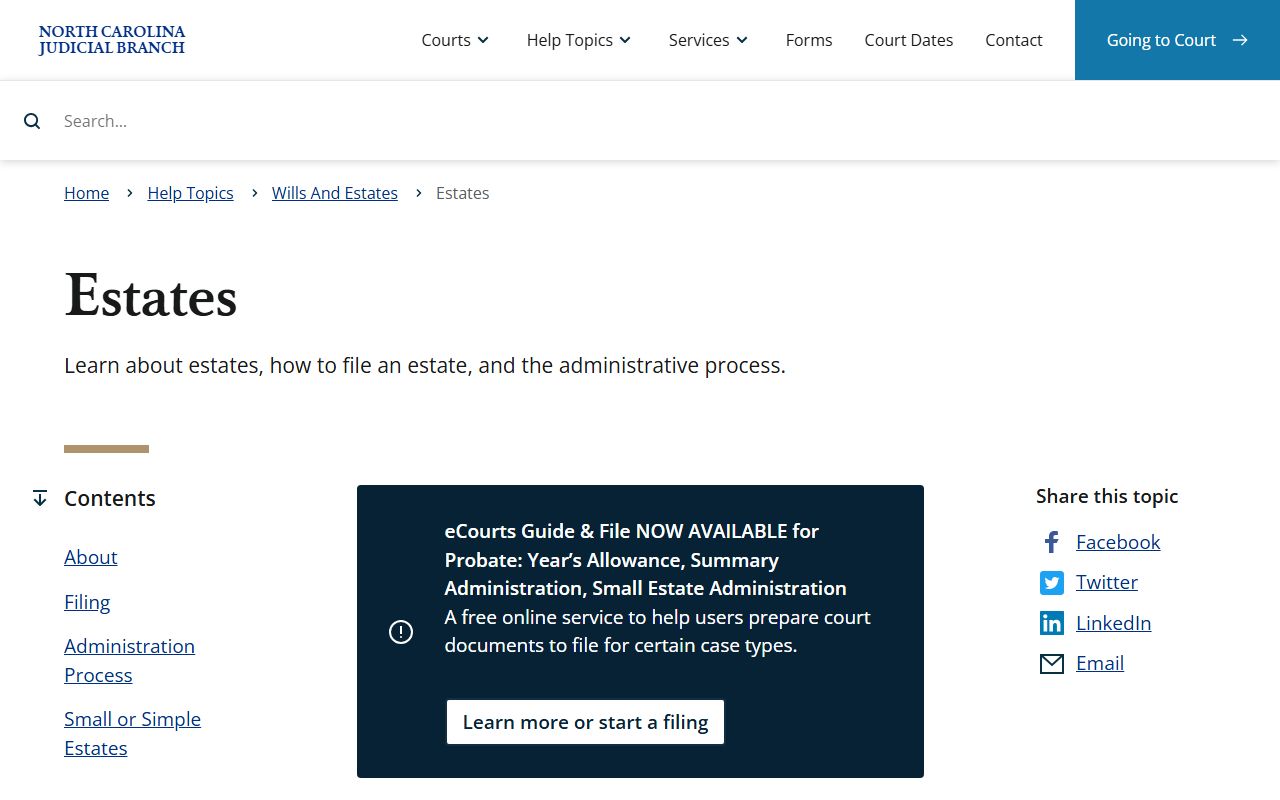
That statewide estates material applies to Orange County because Orange County probate records are part of North Carolina's unified court system.
Orange County Probate Terms
Probate wording can be dense, so the main terms should be read before using a file or filing papers. In Orange County, these terms appear in estate files, guardianship proceedings, special proceedings, and clerk orders. They help distinguish the person who died, the person managing the estate, and the court process used to transfer or protect property.
- Testator
- A person who made a will.
- Executor
- A person named to carry out a will after the clerk issues authority.
- Intestate
- Dying without a valid will, so estate distribution follows North Carolina law.
- Guardianship
- A clerk proceeding to appoint someone to make decisions for an incapacitated adult or certain minors.
- Conservatorship
- A property-management role often discussed with guardianship, although North Carolina sources in this research use guardianship terms.
Search Orange County Estate Files
Estate information can be searched through the North Carolina eCourts Portal when it is public and nonconfidential. The Portal Smart Search can search by name, record number, case number, attorney, business, or nickname, and the training material lists Estates as an advanced filtering category. Location filtering should be used to narrow results to Orange County. If a record is older, incomplete online, restricted, or tied to paper filings, the clerk office remains the controlling access point.
| Search Field | Type | Orange County Use |
|---|---|---|
| Smart Search | Text | Search by decedent, party, attorney, business, record number, or case number. |
| Advanced category | Filter | Use Estates when available for probate records. |
| Location | Dropdown/filter | Select Orange County to narrow statewide results. |
| Filing date range | Date range | Useful when the approximate estate opening date is known. |
| In-person terminal | Clerk terminal | Available for estates information in clerk offices. |
For estate files that require in-person review, contact the Estates office first because Orange County's official courthouse notice says estates appointments are required.
Orange County Probate Filings
The Judicial Branch estates page states that eCourts Guide & File can help prepare several probate filings, including year's allowance, summary administration, and small estate administration. The research also lists statewide probate forms such as AOC-E-301 for subscribing witnesses or a notary serving as an attesting witness, AOC-E-302 when witnesses are not available, AOC-E-304 for holographic wills, and AOC-E-306 for certificate of probate.
A practical Orange County probate workflow begins by deciding whether a decedent had assets that require estate administration and whether a will exists. The filer then contacts Orange Estates for an appointment. The usual preparation items are a death certificate, the will or codicil if any, asset and debt information, names and addresses of heirs or beneficiaries, and photo ID. The clerk or assistant clerk reviews the filing and issues authority if the requirements are met.
The North Carolina guardianship topic explains that clerk or assistant clerk officials hear competence and guardianship matters.
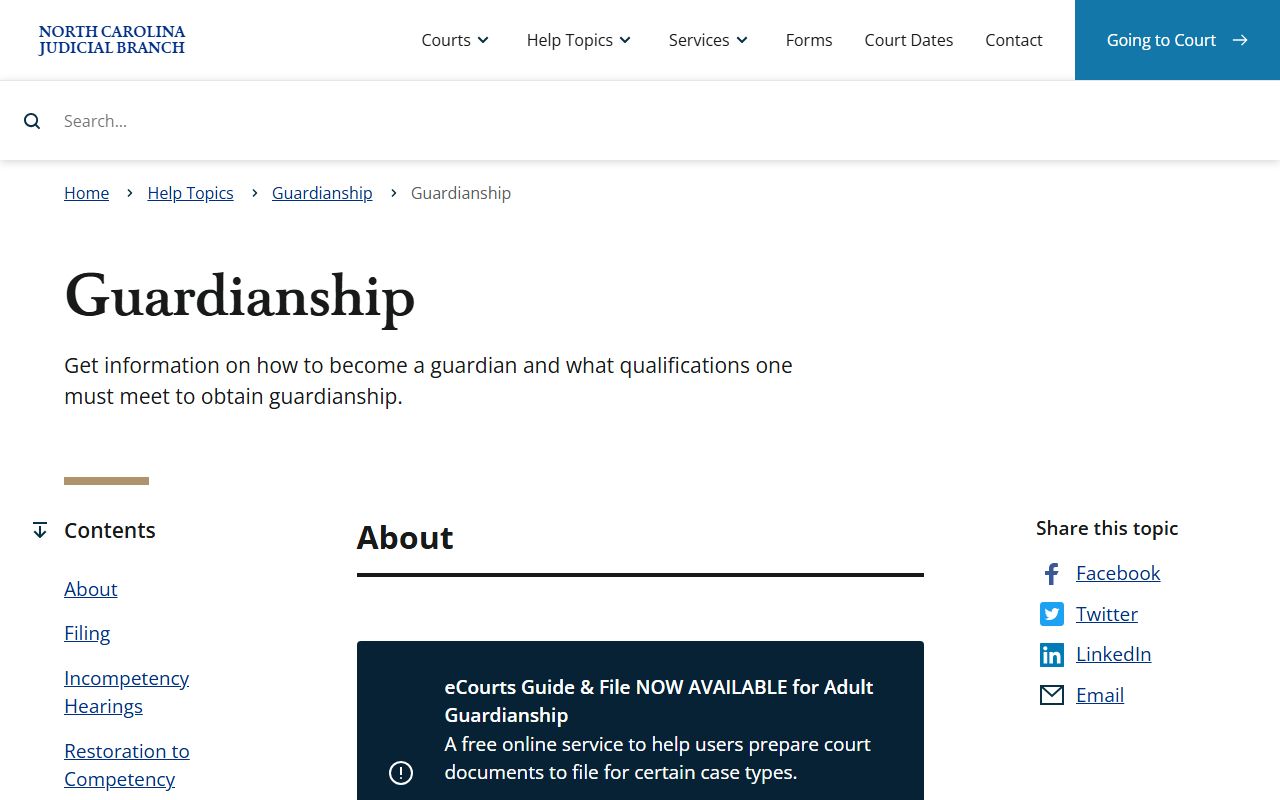
Guardianship records may be connected to probate work, but access can be more limited because of the people and capacity issues involved.
Orange County Probate Fees
Probate costs in Orange County follow North Carolina statewide court-cost authority. The research identifies N.C.G.S. 7A-307 as the estate administration cost statute. It states that estate administration costs include $106 for support of the General Court of Justice plus an additional 40 cents per $100 of gross estate, with that gross-estate assessment capped at $6,000. Current cost charts may include other line items, so the current court-costs page should be treated as the live fee source before payment or filing.
| Probate Cost Item | Amount or Source | Notes |
|---|---|---|
| Support of General Court of Justice | $106 | Estate administration cost listed in N.C.G.S. 7A-307 research. |
| Gross-estate assessment | 40 cents per $100 | Assessment is capped at $6,000. |
| Other estates costs | Current costs page | Use the current Judicial Branch cost charts before filing. |
| Paper copies | Clerk fee schedule | Confirm current copy cost with Clerk of Superior Court. |
The North Carolina court costs overview explains where current cost charts are published.
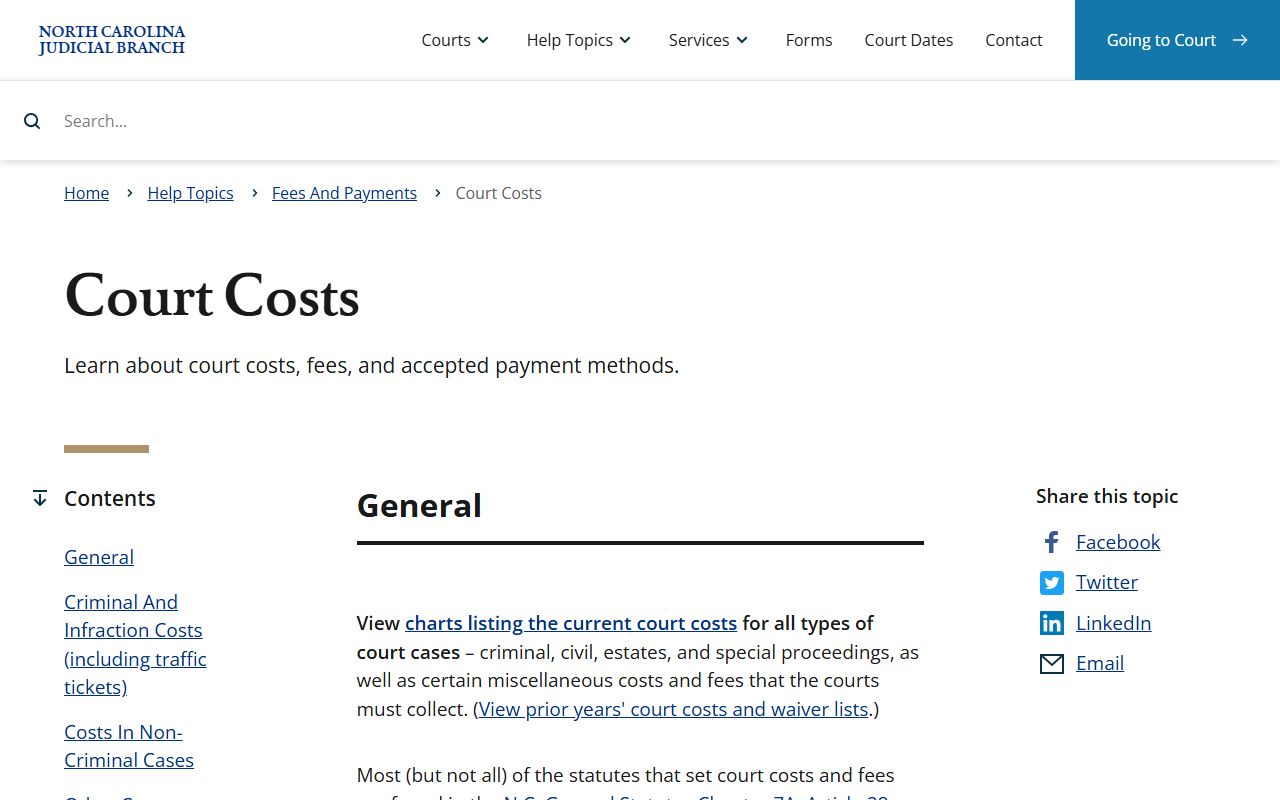
Cost charts are especially important for Orange County probate records because estate filings can have both base costs and value-based assessments.
Restricted Orange County Probate Records
Not every probate-related filing is fully public. Guardianship and incompetency matters can include medical, capacity, family, and financial details. Juvenile, adoption, mental health, sealed, and redacted personal-identifier material may be withheld under North Carolina law or court order. The public may be able to view nonconfidential docket information, while documents or sensitive details require in-person review, elevated access, or court authority.
Paper file copies for public estate records are requested through the Clerk of Superior Court in the filing county. Orange County NextRequest is for county administrative records, not court case files. Marriage certificates are handled by the Register of Deeds, and divorce judgments are handled by the clerk. A probate request should not be sent to the Register of Deeds unless the goal is a deed, vital record, or other Register-held document.
The current court costs publication page is the source for annual Judicial Branch cost charts.
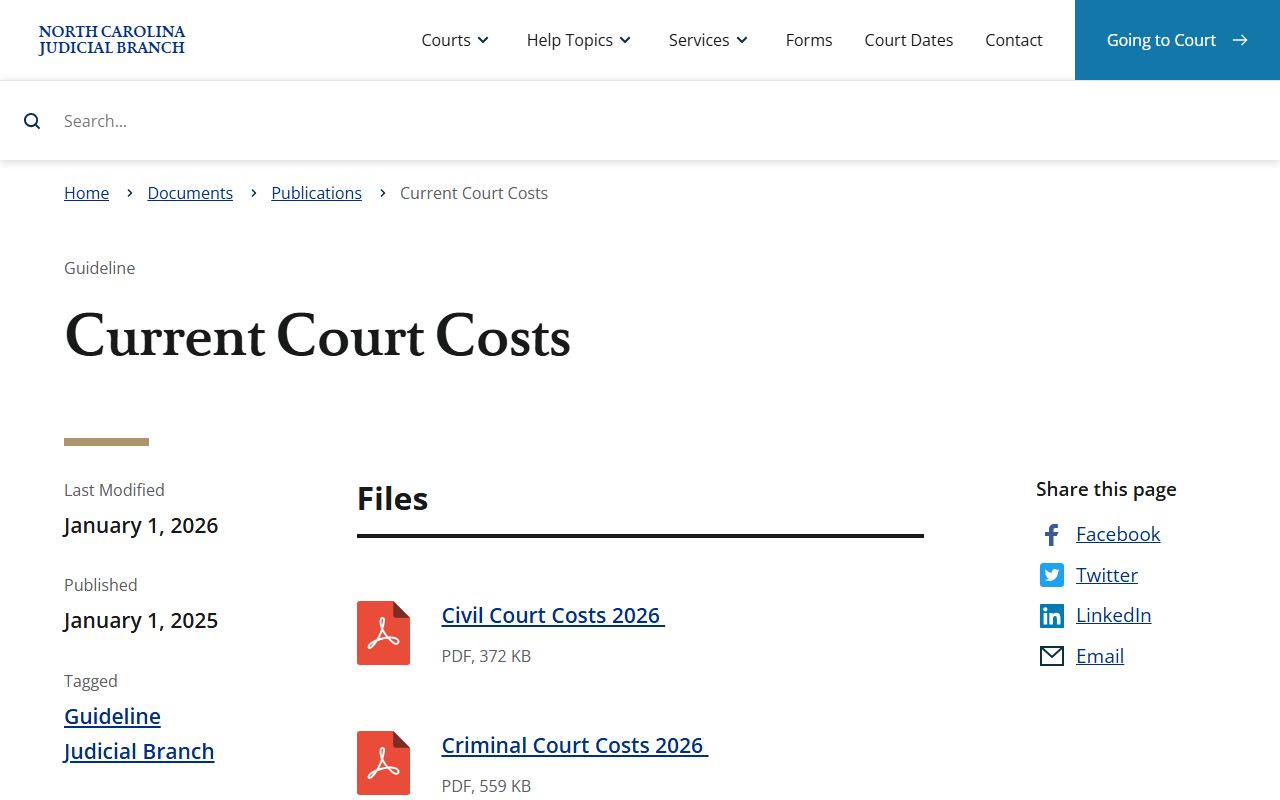
Checking the current cost publication before an Orange County probate filing helps avoid relying on an old fee amount.
Note: For estate appointments, Orange County specifically says to call or email first because walk-ins are not accepted.