
Orange County Arrest Records and Court Charges
Orange County arrest records and charge records overlap, but they are not the same file. The arrest side is created by law enforcement and detention activity. It can show that a person was booked, the arresting or holding agency, custody status, bond type, docket number, and a listed charge. The court charge side is the criminal process that appears in court records after a charge is filed, amended, dismissed, reduced, or resolved.
The Orange County Sheriff's current detainees page uses a downloadable Daily In Custody Report rather than a name-search booking form. The full custody and booking route belongs with Orange County inmate records. The full court case outcome belongs with criminal court records. This page follows the middle path: how an arrest turns into court charges, how those charges are read, and which Orange County offices are involved.
The manifest image from Orange County's First 24 Hours After an Arrest guide supports the local arrest-to-court pathway.
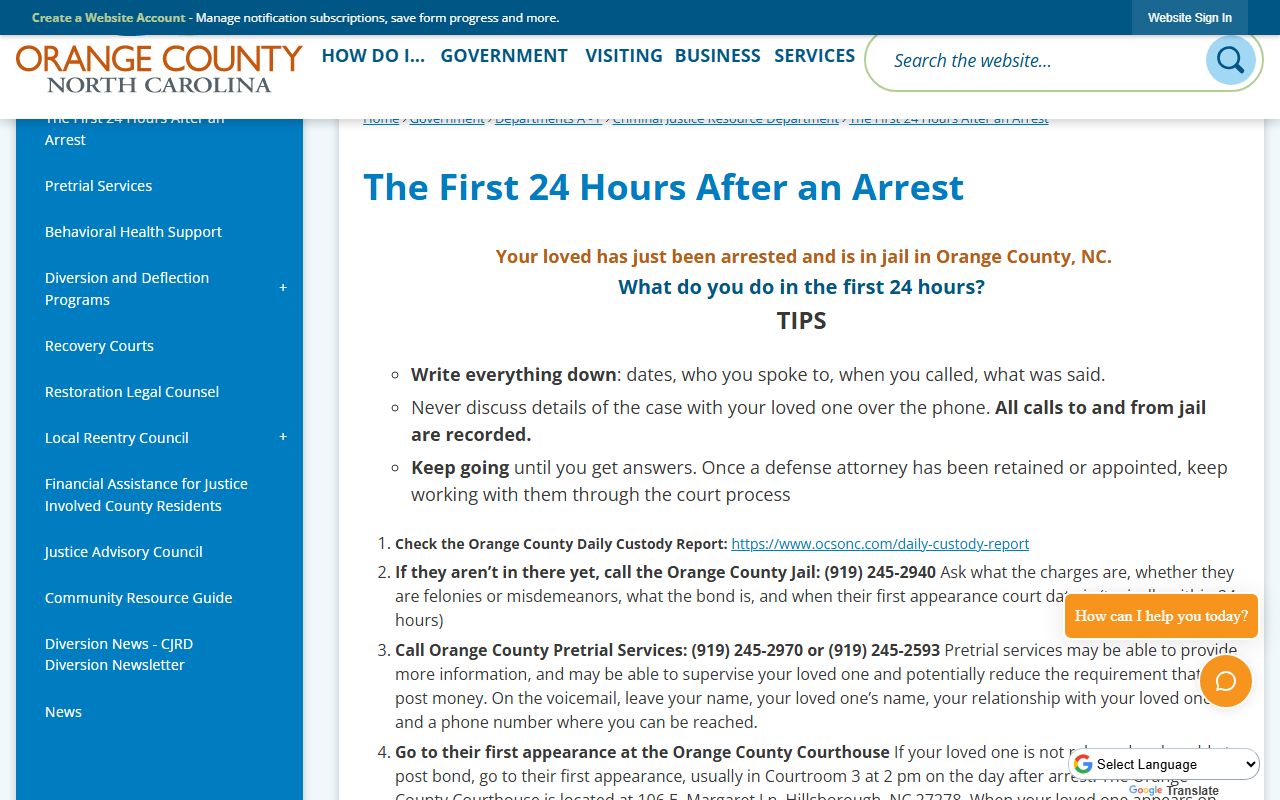
That county source tells families to check custody information, call the jail if needed, and ask about charges, felony or misdemeanor status, bond, and first appearance.
Find Orange County Arrest Records
The first custody check is the Orange County Sheriff's current detainees page and Daily In Custody Report. If a person is not yet listed, the county arrest guide says to call the jail and ask about charges, felony or misdemeanor status, bond, and first appearance. After the charge appears in the court system, the court route is the North Carolina eCourts Portal and the Clerk of Superior Court.
- Check the Sheriff's current detainees page for the Daily In Custody Report when the person may be in jail.
- Call the Orange County Detention Center if the person is not listed yet or if bond and first appearance details must be confirmed.
- Search Portal Smart Search by defendant name, case number, citation number, or docket number once charges have entered the court system.
- Review each charge line for charge text, status, court date, bond, and disposition when available.
- Use the Clerk of Superior Court for paper files, certified copies, or case details not visible online.
Orange County's Pretrial Services research adds that first appearances for detained misdemeanor and felony defendants are Monday through Friday at 2 p.m. in Courtroom 3 of the Orange County Courthouse. The District Attorney and Public Defender are represented in that setting. First appearance information helps connect a booking record to the first court charge event.
Orange County Charge Fields After Arrest
The Daily In Custody Report is not a full criminal case file, but it gives a strong field inventory for arrest and charge cross-checks. The inspected PDF was titled "Daily In Custody Report by Facility" and organized entries by person and charge rows. The research captured fields that are especially useful when linking an arrest to the later court record.
| Field | What It Shows |
|---|---|
| Name | The person held in custody. |
| Booking number | The jail booking identifier. |
| Charge(s) | The listed offense text tied to the custody entry. |
| Agency | Agency abbreviation such as OCSO, Hillsborough Police, Chapel Hill Police, Carrboro Police, State Highway Patrol, or UNC. |
| Judicial status | Status values such as pretrial, dismissed, sentenced, hold, or time served when shown. |
| Docket | The criminal or court docket number that can be checked in court records. |
| Bond and type | Bond amount and labels such as secured, unsecured, no bond, included, served, or domestic. |
| Court date | The listed court or court-date field after booking. |
Note: A custody report can show a charge row before the full court case file shows every later event.
Charges Filed After Arrest
After arrest, a charge may move through magistrate process, prosecutor review, and court filing. North Carolina records may show warrants or orders for arrest after service, magistrate orders, indictments, informations where applicable, appearances, bonds, pleas, dismissals, dispositions, and judgments. The exact filing route depends on the offense, court level, and prosecutor action.
| Document Type | Common Role | Orange County Record Effect |
|---|---|---|
| Complaint or criminal process | Starts or supports a criminal allegation after law enforcement action | May appear with charge, magistrate, bond, first appearance, or docket activity. |
| Information | Prosecutor-filed accusation where allowed by procedure | Shows the charge the state elects to pursue in court. |
| Indictment | Grand jury felony charging document | Moves a felony charge into Superior Court prosecution when returned. |
The manifest image from Orange County Pretrial Services supports the local first appearance, risk assessment, custody review, and Strike Order context.
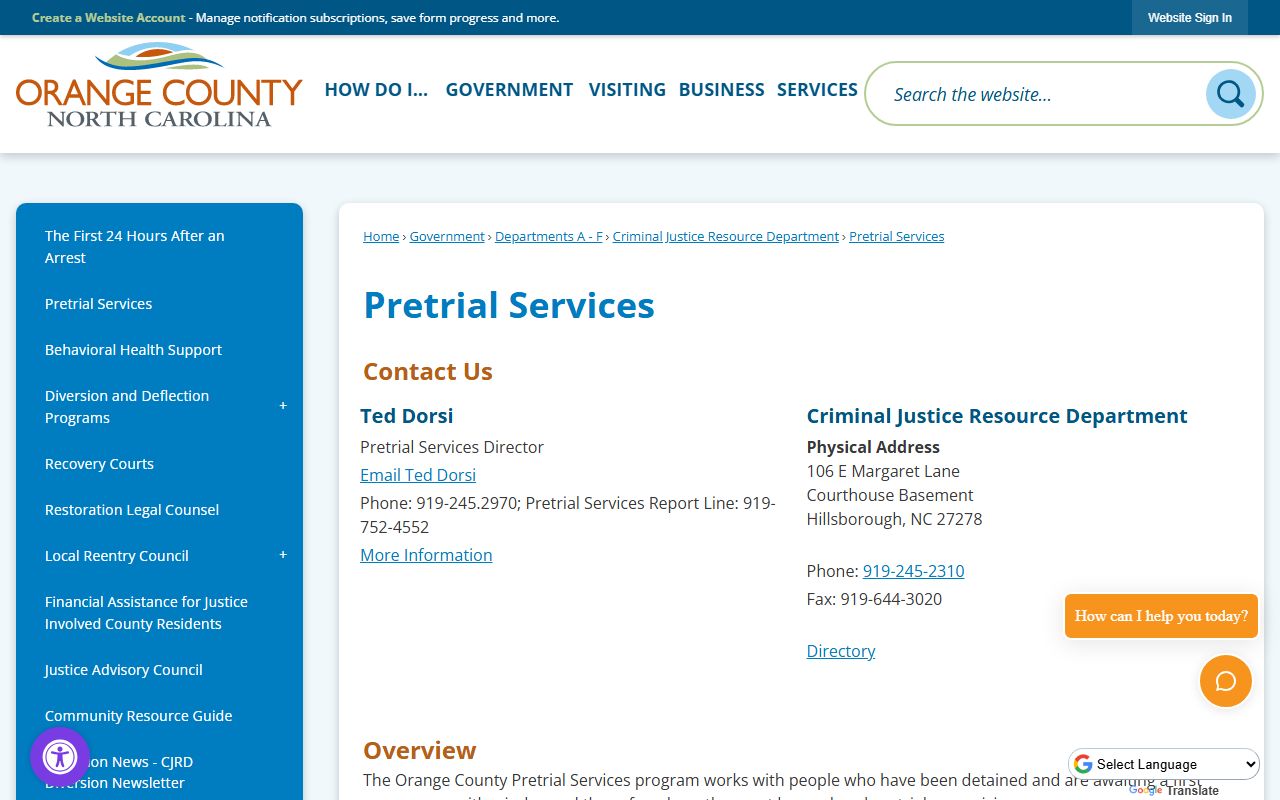
Pretrial Services matters because the charge record often becomes meaningful to families at first appearance, bond review, or a later failure-to-appear setting.
Orange County Charge Status
Charge status can change as the case moves. One arrest may produce several charge rows. Some charges remain pending, some are amended or reduced, some are dismissed, and some end in a plea or judgment. The docket must be read charge by charge, because one count can be dismissed while another count moves to sentencing.
| Status | What It Means |
|---|---|
| Pending or pretrial | The charge is still active and no final disposition has been entered for that count. |
| Amended or reduced | The charge text, level, or count has changed from the first filed version. |
| Dismissed | The charge ended without a conviction on that allegation. |
| Disposed or sentenced | The court entered an outcome, judgment, sentence, probation term, or other final action. |
| Failure to appear or order for arrest | The charge record may show missed court, an order for arrest, or a later court date after review. |
DA and Public Defender Roles
The District Attorney for Prosecutorial District 18 prosecutes state criminal cases in Orange and Chatham counties. The research identifies Jeff Nieman as District Attorney and lists the district office at 144 East Margaret Lane, Hillsborough, NC 27278, with phone 919-644-4600. The DA is represented at first appearances, which is often where families first hear how charges after arrest will be handled in court.
The Public Defender is part of Defender District 18. NCIDS lists Woodrena Baker-Harrell as Public Defender, with the Orange County office at 115 East King Street, Hillsborough, NC 27278, phone 919-643-4400. Public Defender representation is for eligible appointed cases. It should not be described as general legal aid, but it is a key office when a detained person qualifies for appointed counsel.
The manifest image from the District Attorney for Prosecutorial District 18 identifies the local prosecutor for Orange and Chatham counties.
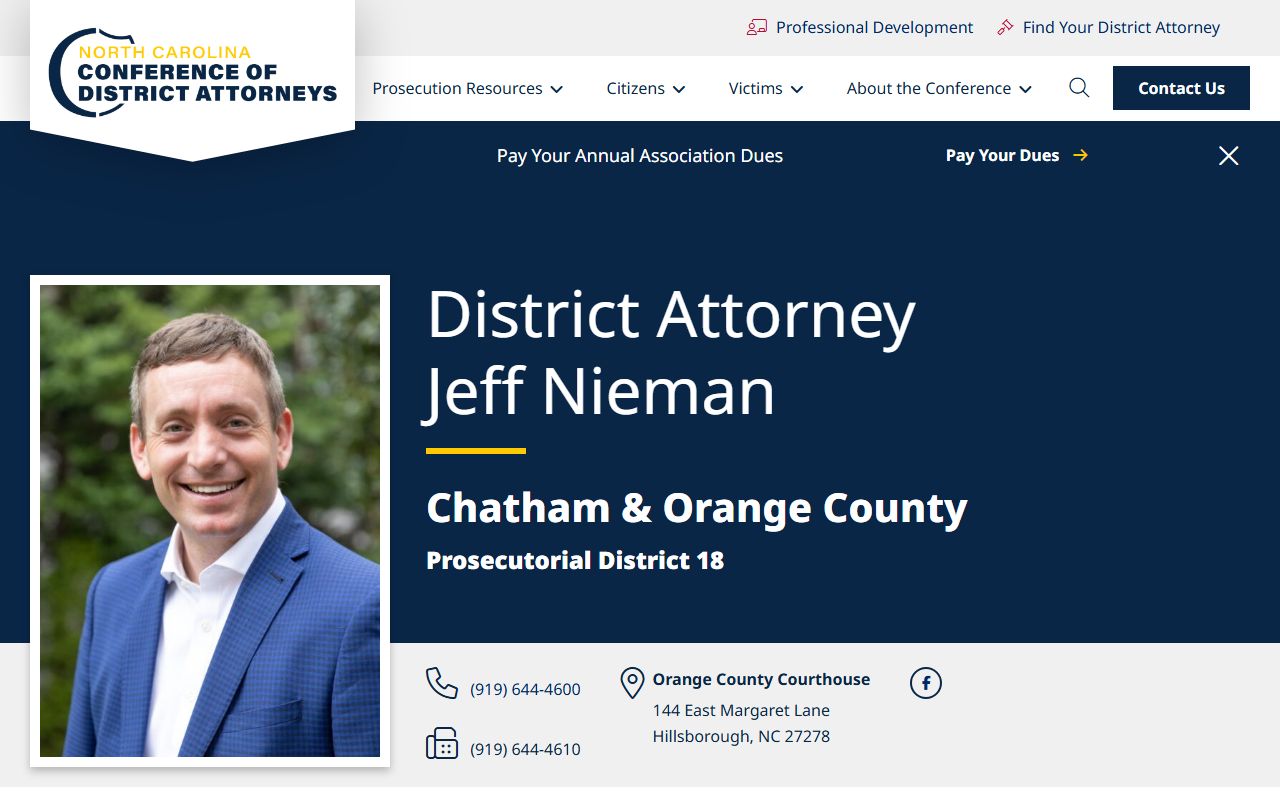
The prosecutor source is relevant to charge records because the DA decides how state charges are pursued after arrest and first appearance.
The manifest image from the NCIDS Orange County Public Defender page supports appointed-defense context.
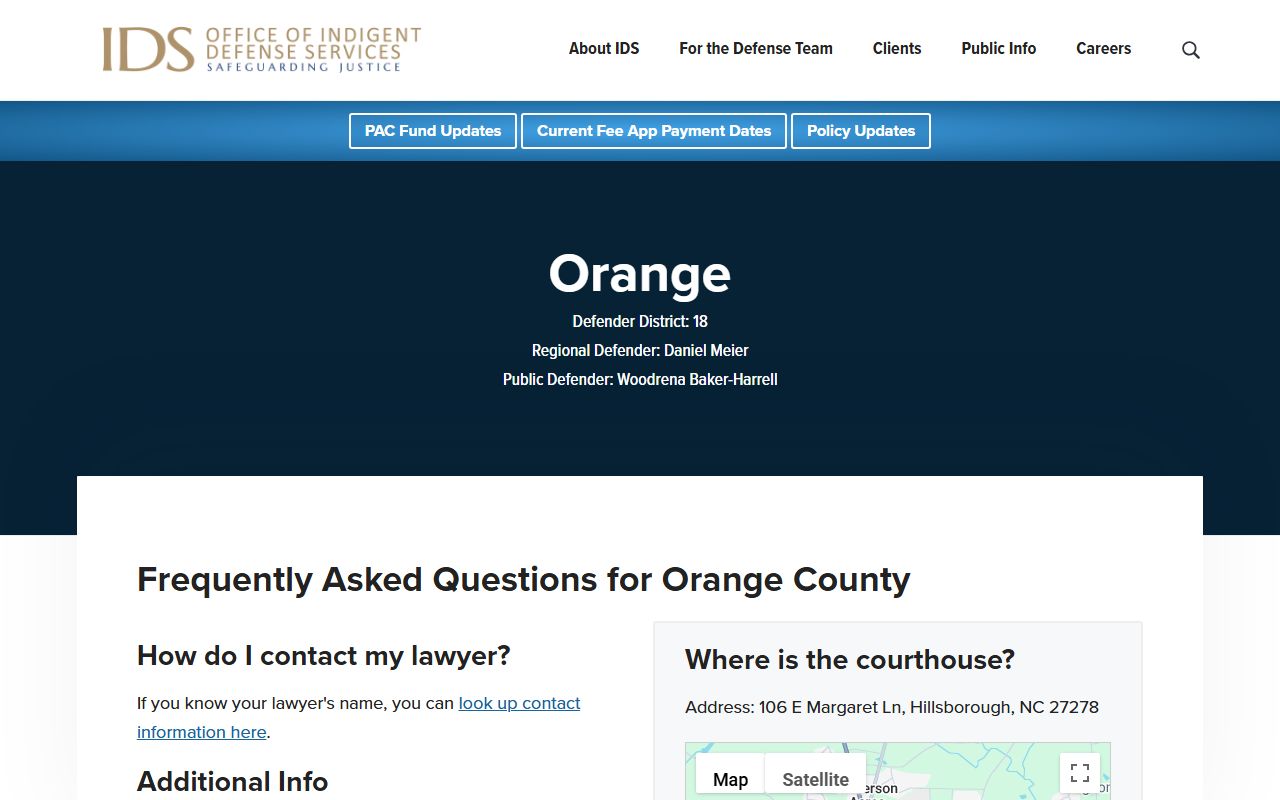
Defense appointment and eligibility affect the court path after arrest, but they do not change the public meaning of a charge versus a conviction.
Charge Records vs Convictions
An arrest and charge are not proof of guilt. A charge is an allegation filed or tracked through criminal process. A conviction is a final result after a guilty plea, verdict, or judgment. Orange County charge records can show dismissed charges, reduced charges, pending counts, or multiple counts with different outcomes.
| Charge | Conviction | |
|---|---|---|
| When it appears | After arrest, process, prosecutor filing, or indictment | After plea, verdict, judgment, or sentencing |
| Meaning | An accusation or filed count | A final finding or admitted offense |
| Can change | Yes, it may be amended, reduced, dismissed, or dropped | Only changed through court order, appeal, or authorized post-judgment action |
| Search caution | Read the status for each count | Read sentence, probation, costs, and restitution fields |
Orange County Charge Review Programs
The Criminal Justice Resource Department is part of the local arrest and charge ecosystem. Its programs include Pretrial Services, Recovery Courts, and other criminal justice resources. The Strike Order docket is especially tied to failure-to-appear and order-for-arrest risk. The research states it runs Thursdays at 9 a.m. in Hillsborough, with people reporting to the Clerk between 8:30 and 9:00 a.m.
The manifest image from the Orange County Criminal Justice Resource Department shows the local program source.
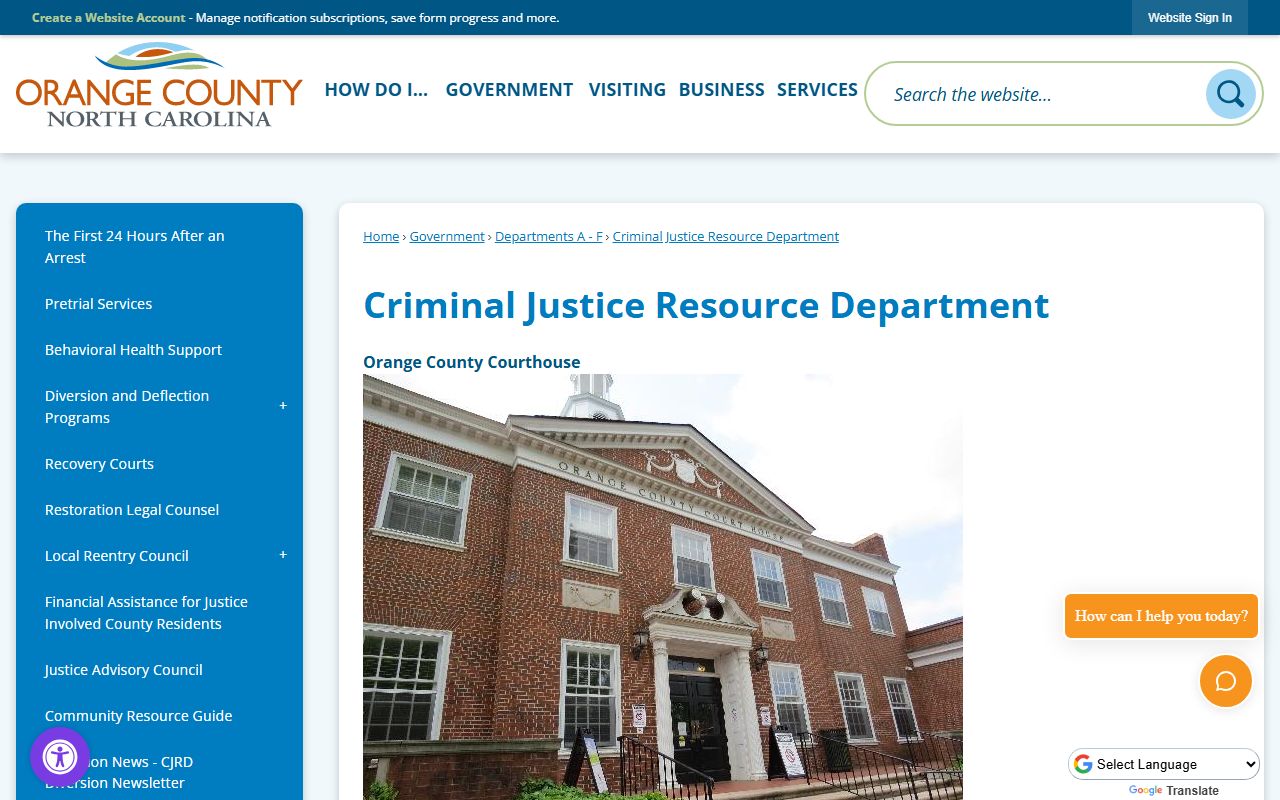
CJRD resources do not erase charges by themselves, but they can affect pretrial review, court compliance, treatment connection, and failure-to-appear resolution paths.
Sealed and Expunged Arrest Records
Arrest records, charge records, and criminal case records can be limited by law. Juvenile records are generally confidential. Sealed records are hidden from ordinary public inspection. Expunged records are removed from public access after a statutory petition and order. North Carolina expunction eligibility depends on the exact statute, charge type, conviction history, waiting period, and exclusions. A dismissed charge does not automatically vanish from every public record without an expunction or other legal restriction.
| Sealed | Expunged | |
|---|---|---|
| Public access | Hidden or limited by statute or court order | Removed from ordinary public access after order |
| Typical reason | Confidential case type, protected information, or specific court order | Eligible record under North Carolina expunction statutes |
| Search result | May show limited information or no public detail | Should not appear as a standard public case result |
| Local filing | Handled through the court record when authorized | Filed in the county of the original case when eligible |
Statewide Charge Record Cross-Checks
Statewide sources can help, but they have different custodians. NC DAC offender information is for state prison, probation, and parole status, not the Orange County court charge file. The SBI sex offender registry is a public safety registry, not a complete criminal history. Portal and the Clerk of Superior Court remain the source for court charges, dispositions, and certified court copies.
The manifest image from the North Carolina defender directory supports statewide defense-office lookup context.
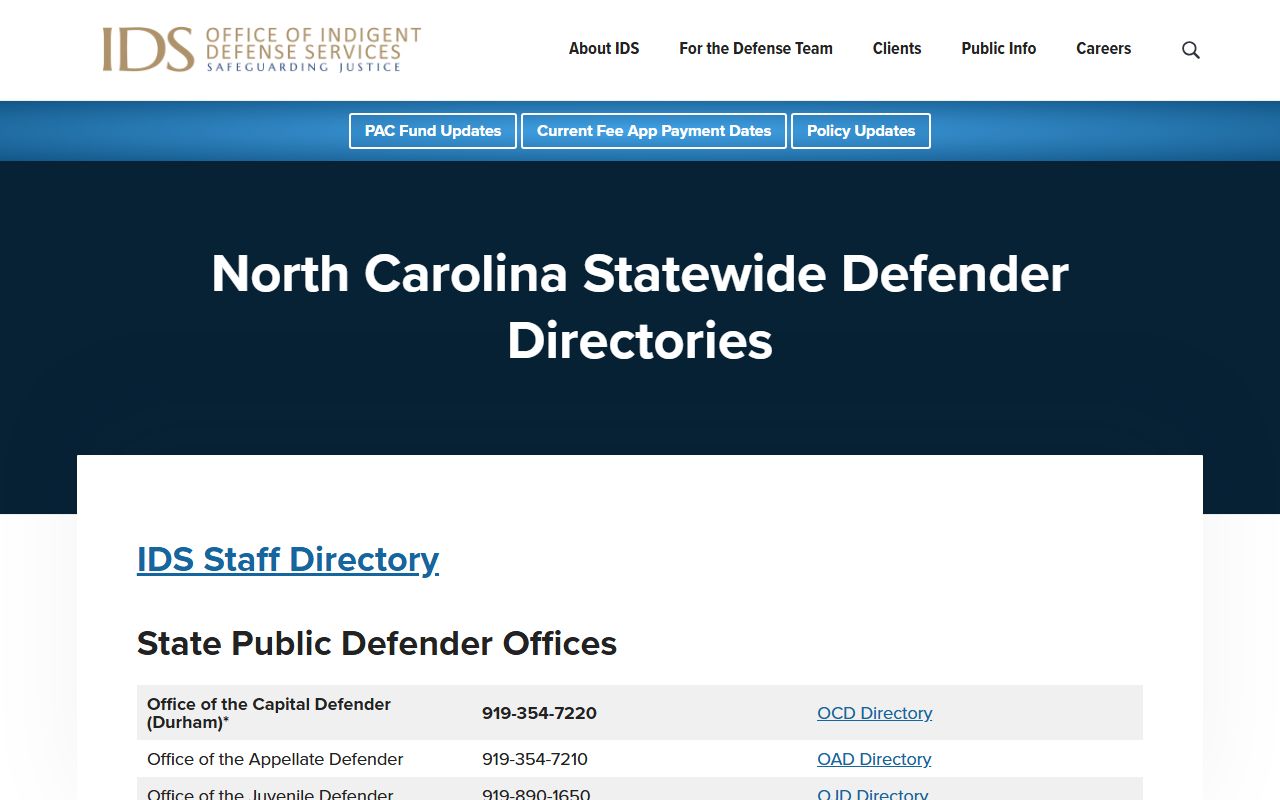
The directory is relevant when an arrest record turns into an appointed-defense question, but charge status still must be read in the court record.
Restricted Orange County Charge Records
Restricted charge records include juvenile matters, sealed cases, expunged records, certain protected personal identifiers, mental health information, and confidential family or protected-party details. Law enforcement investigative files may also be separate from the court record and may not be available through the clerk. The public charge record should be read from official custody, court, and clerk sources rather than third-party arrest pages.
Important: Do not treat a listed arrest charge as a conviction unless the court record shows a final disposition.