
How to Search Orange County Court Records
The main official online channel is the North Carolina eCourts Portal. The Judicial Branch describes Portal as the place to search court records, find hearing dates, and make payments. For Orange County, that means the search is statewide first, then narrowed to the local venue. Smart Search can return a public case summary or Register of Actions when the case is not sealed, confidential, or otherwise restricted.
The Portal training resources explain that a search may use a party name, case number, citation number, attorney bar number, attorney name, business name, cross-reference number, or nickname. If the online view does not show the document or if a certified copy is needed, the fallback is the Orange County Clerk of Superior Court. Paper case files are viewed in the county where the case is filed.
- Open Portal and use Smart Search for case records, Search Hearings for court dates, or NC Judgment Search for judgment index entries.
- Enter the strongest identifier first, such as a case number, citation number, business name, or full party name.
- Apply the Orange County location filter when it is available, then narrow by case type, status, filing date range, or hearing field.
- Open the public case summary or Register of Actions and compare party names, filing dates, hearing dates, and case status before relying on a result.
- Call or visit the Clerk of Superior Court when Portal does not show a complete file, when the case is old, or when a certified copy is required.
The official court-record instructions are summarized on the Judicial Branch's obtaining court records page. That source is important because the Judicial Branch warns that Portal is a case-information tool, while background-check users should use the county clerk's office.
The court-record access instructions are shown in the manifest image from the official Judicial Branch record access page.
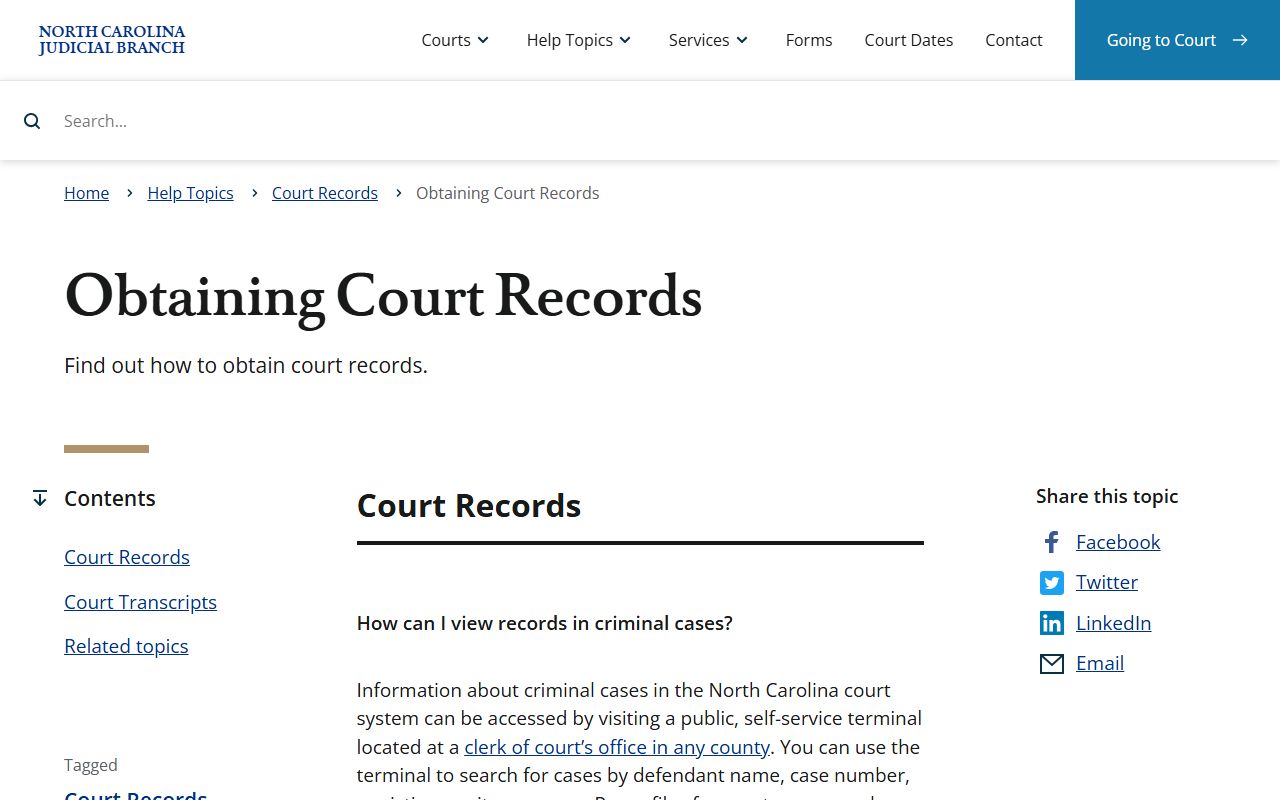
That source reinforces the split between online case summaries, in-person public terminals, and paper files held by the clerk in the county where the case was filed.
Orange County Court Records Search Fields
Portal is broad, so the best search method depends on the record type. Criminal, civil, special proceeding, nonconfidential estates, traffic, and judgment records can use different identifiers. The research captured the official field guidance from the Portal training page, including wildcard rules that matter when a name is uncertain. Case-number searches also follow North Carolina's Enterprise Justice format, with a year, case-type letters, sequence number, and county identifier when the full number is known.
| Field Label | Type | Required | Notes / Format |
|---|---|---|---|
| Smart Search | Text | Unspecified | Search by party, record number, case number, citation number, attorney, business, cross-reference, or nickname. |
| Location / County | Dropdown or filter | Optional | Use Orange County to narrow statewide results. |
| Party Name | Text | Optional | Wildcard rule: last name needs at least three characters plus asterisk; first name needs at least one character plus asterisk. |
| Date of Birth | Date | Optional | Narrows party searches when shown in public criteria. |
| Case Type | Dropdown or filter | Optional | Advanced categories include civil actions, special proceedings, nonconfidential estates, and criminal actions. |
| Case Status | Dropdown or filter | Optional | Use when separating pending, disposed, dismissed, or other visible statuses. |
| Filing Date Range | Date range | Optional | Helpful for common names or older case searches. |
| Search Hearings | Text and filters | Optional | Search by case number, party, business, attorney, judicial officer, or courtroom. |
| NC Judgment Search | Party or case number | Optional | Filters can include case type, status, location, and judgment date. |
The manifest image assigned from the Portal training page supports the search-field guidance above.
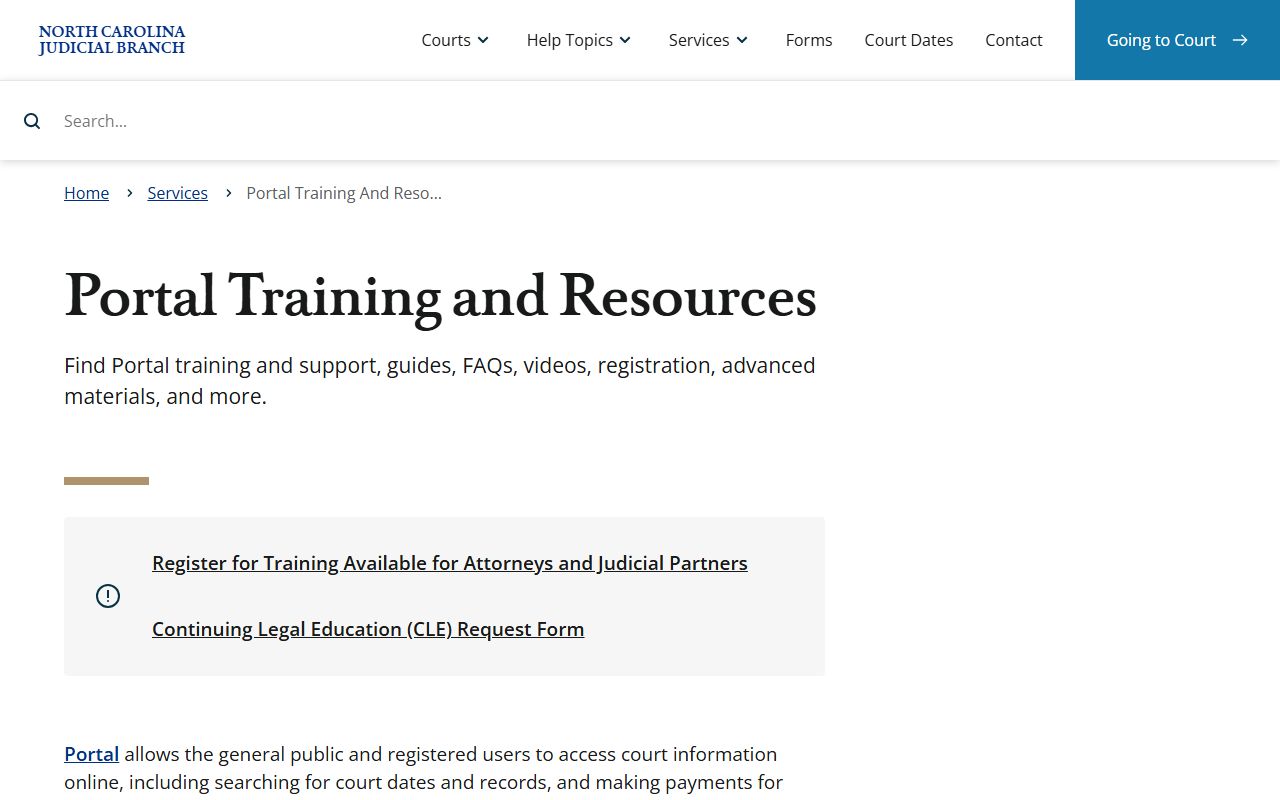
Because Orange County records sit inside the statewide Portal, filters and exact identifiers are often the difference between a useful hit and a long list of unrelated names.
Types of Orange County Court Records
Orange County uses North Carolina's unified court system. Superior Court and District Court records are kept through the Clerk of Superior Court, not by a separate county clerk. Superior Court generally handles felony criminal matters, larger civil matters, jury trials, special proceedings, and appeals from District Court where a new trial is available. District Court generally handles misdemeanors, infractions, traffic, juvenile matters, domestic matters, small claims appeals, and lower civil matters.
Not every public record with a person's name is a court record. Marriage licenses, marriage certificates, land records, military discharges, and assumed business names are Register of Deeds records. Sheriff detention status is a sheriff record. Driver histories are NCDMV records. County administrative requests use Orange County's public-records portal, while case files stay with the Judicial Branch and clerk.
- Civil records may include complaints, answers, motions, orders, judgments, liens, lis pendens, foreclosures, evictions, condemnations, and partitions.
- Criminal records may include charges, magistrate orders, warrants after service, indictments, appearances, bonds, pleas, dismissals, dispositions, judgments, probation, restitution, and costs.
- Traffic and infraction records may show citations, waivers, court dates, dispositions, fines, costs, failure-to-appear entries, and payment status.
- Family and domestic records include divorce, custody, child support, domestic violence protective orders, and related motions, though sensitive records may be limited.
- Estates and special proceedings can include wills, estate administration, guardianships, incompetency files, inventories, accountings, foreclosures, and partitions.
The online case interface appears in the manifest image from the North Carolina eCourts Portal.
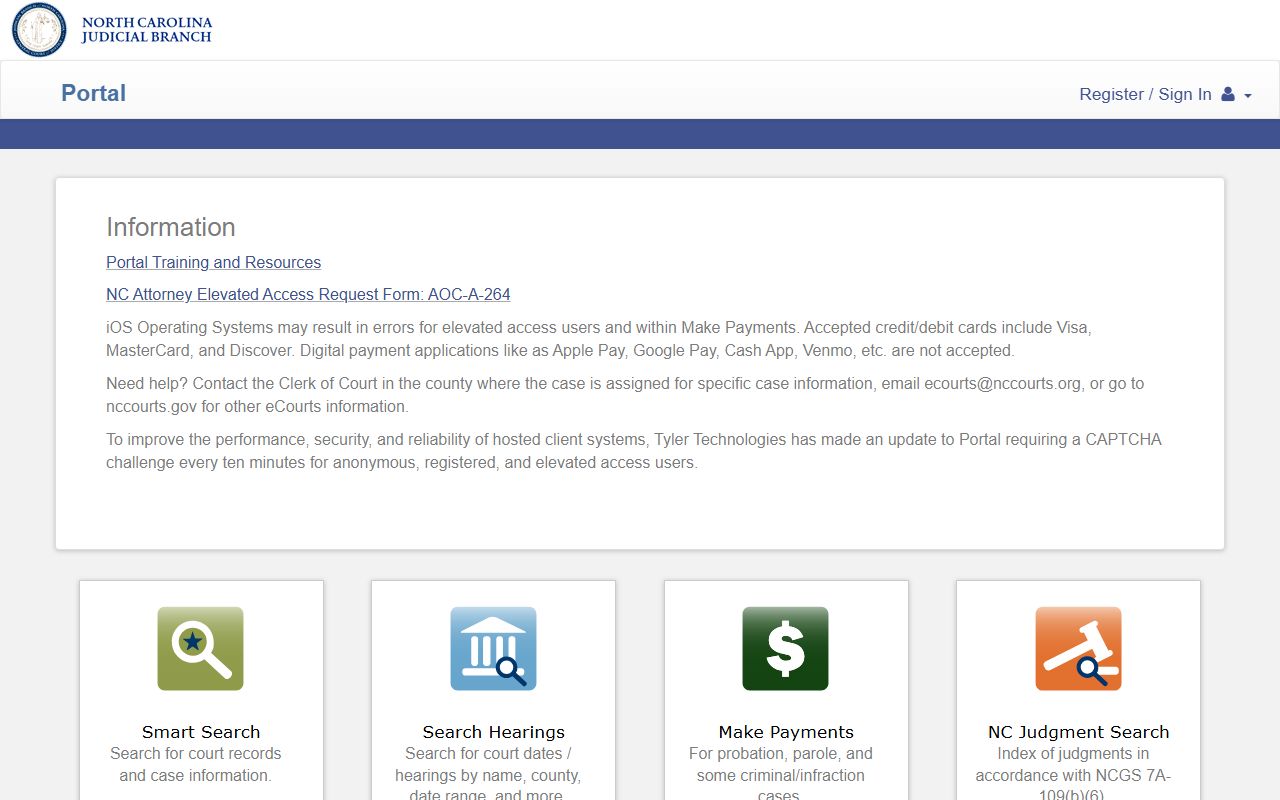
That statewide portal is useful for Orange County case information, but the clerk remains the custodian for the local paper file and certified copies.
What Orange County Court Records Show
A public case summary does not always equal a full file. Portal training says a case summary or Register of Actions can display case information, assignment information, party information, causes of action in civil, family, probate, and mental health matters, case events, dispositions, hearings, and financial information when public. Full documents may be viewable in eCourts counties for public cases, but restricted documents, sealed matters, juvenile matters, and nonpublic details are not available to anonymous users.
| Field | What It Shows |
|---|---|
| Case number | North Carolina format with year, case-type letters, sequence, and county identifier when complete. |
| Court and location | Orange County venue, district, courthouse, courtroom, or hearing location when scheduled. |
| Filing date | The date tied to a complaint, citation, warrant, indictment, petition, application, or estate filing. |
| Parties | Defendant, plaintiff, petitioner, respondent, decedent, personal representative, guardian, attorney, or prosecutor where applicable. |
| Docket events | Motions, hearings, orders, continuances, dismissals, pleas, bond changes, dispositions, and judgments. |
| Hearings | Date, time, courtroom, judicial officer, hearing type, and location when public. |
| Financial information | Costs, fines, restitution, bond amounts, attorney fees, probation fees, and payment status when applicable. |
| Restrictions | Redactions for personal identifiers, minors, sealed matters, expunctions, mental health records, or confidential case types. |
For judgment-related searches, the manifest includes a source image from the Judicial Branch public record request service.
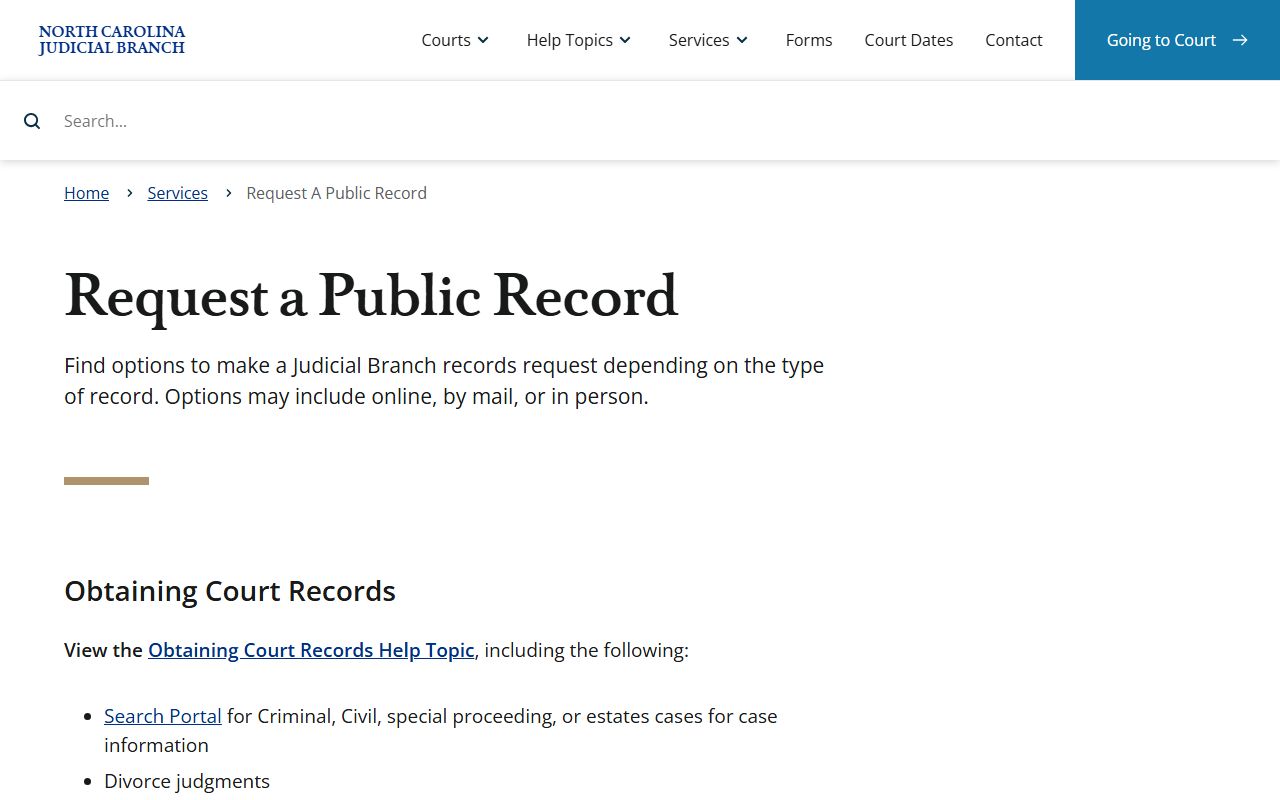
The record-request route is for Judicial Branch records by type, while ordinary county administrative records are routed through a separate county process.
Public Access for Orange County Court Records
North Carolina treats court files differently from county administrative records. N.C.G.S. 7A-109 requires clerks to keep court records, files, dockets, and indexes and states that those records are open to public inspection unless another law prohibits access. N.C.G.S. 132-1 defines public records broadly for public agencies, and Chapter 132 includes inspection, copying, and fee rules for ordinary public records.
That distinction matters in Orange County. County administrative records use Orange County NextRequest, while court files use Portal, the clerk's terminal, or clerk copy channels. Police reports go to the law enforcement agency that made the report. Marriage, vital, and land records go to the Register of Deeds. A request sent to the wrong custodian may be delayed or redirected.
Note: Use the Clerk of Superior Court for court files; use Orange County NextRequest for county administrative records.
The manifest image from the North Carolina public records statute list supports the county versus court-record distinction.
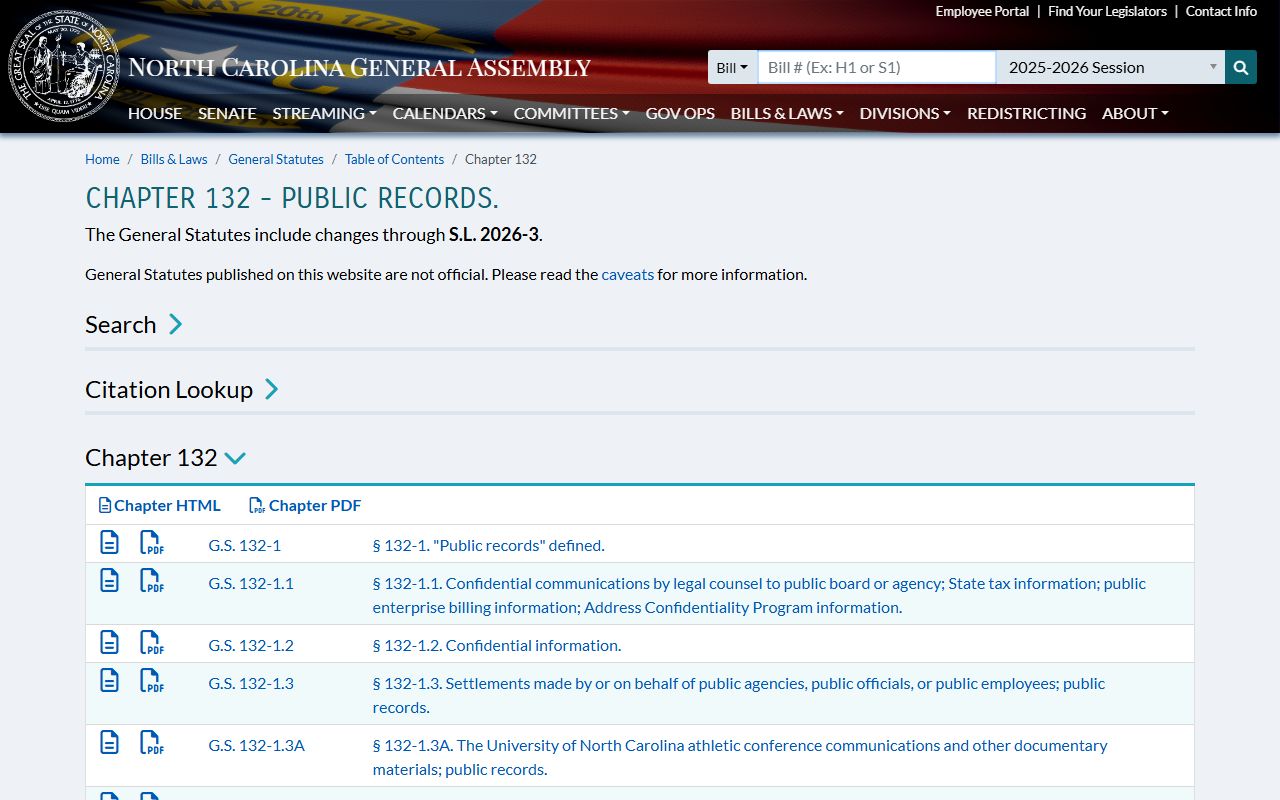
The statute pages help explain why a court record request and a county public-records request can follow different offices even when both involve Orange County.
Restricted Orange County Court Records
Some Orange County court records are public only in part, or not public at all. Juvenile records are generally confidential and maintained separately. Adoption records are confidential. Mental health and involuntary hospitalization matters are limited. Sealed and expunged records are removed from ordinary public access by law or court order. Domestic violence and family records can contain public-facing entries while protecting addresses, minors, and sensitive personal details.
Expunction is statute-specific. The research identifies N.C.G.S. 15A-145.5 as a broad North Carolina expunction statute for certain nonviolent misdemeanors and felonies, with exclusions and waiting rules. If an expunction is granted, public access changes by court order and agency notice. A sealed or expunged file should not be treated as missing data in Portal.
In-Person Orange County Record Requests
The in-person fallback is the Orange County Clerk of Superior Court at the main courthouse. Public terminals can be used for criminal, civil, special proceeding, and estates information in clerk offices. Paper files must be viewed at the clerk's office in the county where the case is located. Copies are available for a fee under the current court-cost schedules, but the research did not extract a fixed copy amount from the current Judicial Branch PDFs.
Orange County Clerk of Superior Court
106 East Margaret Lane
Hillsborough, NC 27278
919-644-4500
Monday-Friday, 8:30 a.m.-5:00 p.m.
Visitors should plan around the local courthouse rule that bags and purses are not allowed inside. Free three-hour parking on East Margaret Lane is documented by the Judicial Branch, but parking rules can change during construction, special events, or courthouse security changes.